Categories
Education family History Photographs Postcards Vintage writing

The Perfect Carriage Ride and a Birthday: Suzie Radley’s 1909 Letter

From: Suzie A. Radley To: Mrs. E.G. Richardson, 1909

Adams, MA. Sept. ’09

This is your birthday. Many returns of the same. Went up this road awhile of weeks ago with Nathan Dickinsons daughter Ruth (17) and son Boyd (13) in a cart with four horses. Such a long winding road in the woods and such a magnificent view from the summit as well as many on the way. William comes in a week. I am not very much better but some.

Yours,

Suzie A. Radley

In September of 1909, news reached the world that both Dr. Frederick Cook and Admiral Peary had reached the North Pole, the United States passed a law that allowed postal workers to skip houses with aggressive dogs, and union members were locked out of their jobs at the Triangle Shirtwaist Company.

It was also E’s birthday. How old she was, or what her first name was, I don’t know. I wasn’t able to find her easily in the records. However, we know that Suzie was thinking of her, which I think is sweet.

On my hunt for information to bring to this post, I really ran into a wall. I couldn’t find a Suzie or Susan or Susannah Radley, I couldn’t find E, I couldn’t even find Nathan, Ruth, or Boyd Dickinson. Usually I can find something, but alas, no luck for me.

Although I don’t have biographical information for our main characters in the post-card, the card itself provides quite a bit of personal and life information. As you can see, the writing was on the front of the postcard, not the back. Again, we have an instance of a transition period postcard. It was legal to split the back, but for whatever reason Suzie didn’t use a divided back card.

Because the photo is so small and because Suzie didn’t have to contend with a divided back, we get a lot of detail about her that we can use to infer other information. The fact that she went on a carriage ride through the woods with a 17 and 13 year old tells us she’s probably somewhere between 15-19. I’d guess she’s closer to Ruth’s age — since that’s who she named first.

The ride through the woods probably took place in the waning days of August. The idea of it is lovely. A warm ride through a shaded wood with the crisp scent of fall on the horizon. Perhaps a bag full of bread and apples, and the joyous chatter of fellow teens to keep you company and a “magnificent” view at the end. What a great way to spend the last bright days of summer.

We also know that Suzie was expecting William. I am guessing he’s a brother or cousin, though I couldn’t find him either. My questions linger on the relationship between E and Suzie. Were they friends, cousins, or sisters? Was Suzie visiting Adams for the summer months, or did she live there? It’s the personal histories that fascinate me. The everyday lives of ordinary people that simply tried to do their best with what they had — it’s heroic. I wish I was able to find more.

But I’ll still bask in the thought of Suzie’s perfect summer day, and hope that E’s birthday brought her much joy and happiness.

Categories
Education History Photographs Postcards Teaching Vintage Writing Prompt

Mystery Postcard from May to Miss Gertrude Jayne, 1910s: Miscommunications Through History

From: May (or Mary) To: Miss Gertrude Jayne. Date Unknown

Dear Sister,

Rec’d your letter yesterday but didn’t understand if you was coming this Sunday or next sunday so let me know for sure so that I will know what to do.

May

This particular postcard is a bit of a mystery, as there’s no stamp and no postmark whatsoever. There’s a divided back, so we know it has to be after 1907. It’s also probably before 1930 because of the style of the card and handwriting. My instinct tells me it’s somewhere between 1912-1922, though I lean towards the twenties.

There’s an urgency about this postcard that’s not apparent in some of my more recent cards I’ve analyzed. May is clearly anxious that she won’t be ready for her sister to arrive, and I have to wonder what the two were planning? Was Gertrude simply coming to visit May or was there something more involved? Maybe it was an event of some sort that May was helping plan, but Gertrude hadn’t been clear on the details.

The other question that burns at my mind is…how was this card delivered? The postage stamp area doesn’t have any sticky residue or tearing that would suggest the stamp was peeled off — though of course it could have been. But there’s also the lack of postmark which indicates that the card was never in fact mailed. Did May have someone take it to Gertrude? Maybe another family member or friend?

Or, was the card never delivered? Simply filed away in the back of a box somewhere only to be discovered and end up in the collection of James Woodruff? The card itself is sort of unremarkable. A pretty photo, but a bit damaged and weathered over time. There’s no embossing or gilt edges, so it’s strange that it’s survived the test of time.

Ok…what about our sender/recipient? Well, after two fantastic finds over the last few days, my luck ran a little dry. I can’t guarantee that I found Gertrude or her sister. I did find a Gertrude Jayne born in 1891 who had a sister named Mary, which I suppose could be our Gertrude. But, I feel like it’s a bit of a stretch. Especially since I don’t have a date on the postcard.

That leads me to James A. Woodruff who I thought might be the son or perhaps nephew of one of our ladies involved in the postcard. His mother did have the middle name of “Mae”, but doesn’t seem to have a sister named Gertrude. I was able to find some information on James. According to Find a Grave he was involved in historical research around his community. He died in 2004 at a relatively young age. I suppose his effects must have been donated, and I like to think that he’d be happy that the postcard became a bit of a public history project.

Though, I do wish I knew more about May (or Mary), Gertrude, and even James. I hope that Ma(r)y managed to get in touch with Gertrude and “knew what to do” for the Sunday that her sister arrived. Whatever happened, this postcard is so very human. We’ve all been on the other end of a vague message where we need more information. It’s good to remember that, for most of history, communication was not instantaneous, but long, muddled, and often fraught with worry.

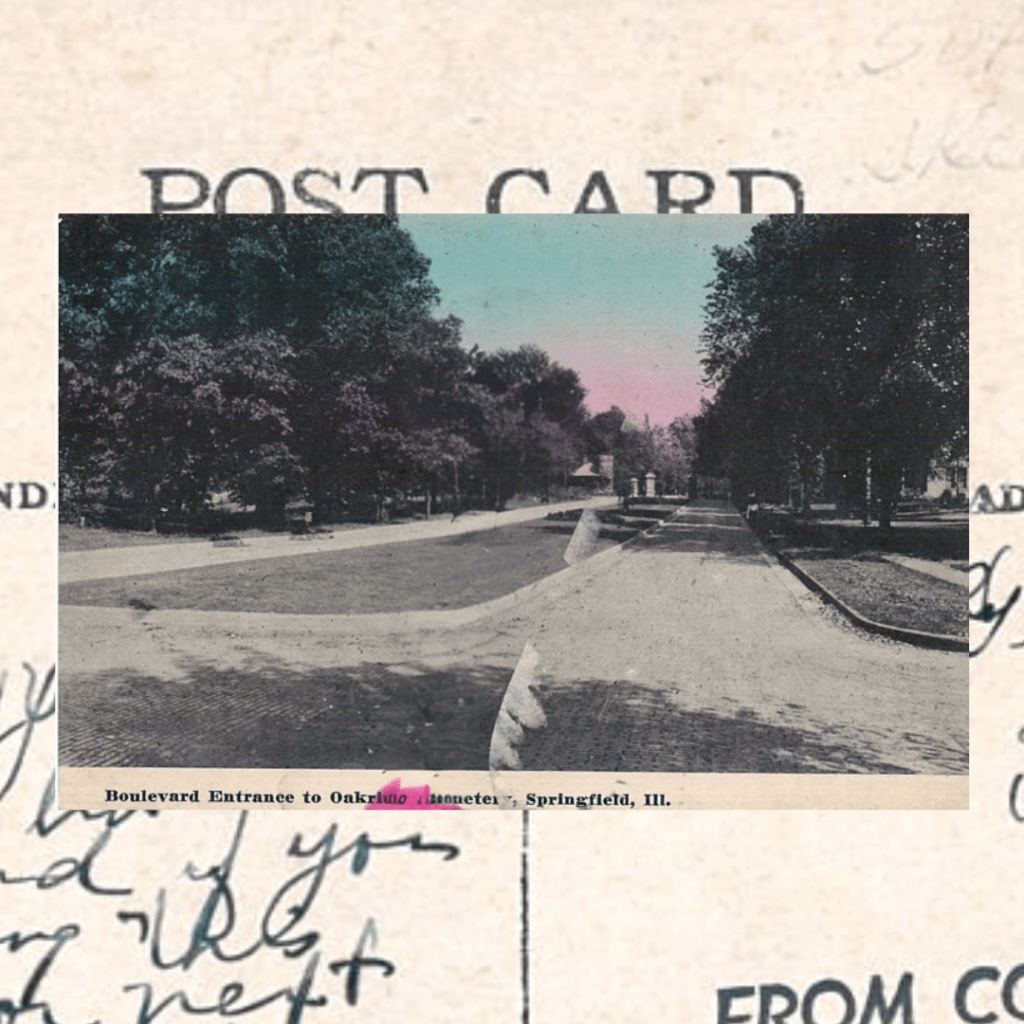
Front of Postcard. Entrance to Oakridge Cemetary

Categories
Education History Photographs Postcards Teaching Vintage Writing Prompt

A Timeless Bond: Uncovering Sylvia and Ethel’s Correspondence

From: Sylvia To: Miss Ethel Maurey. (1906-1910)

Dear Ethel,

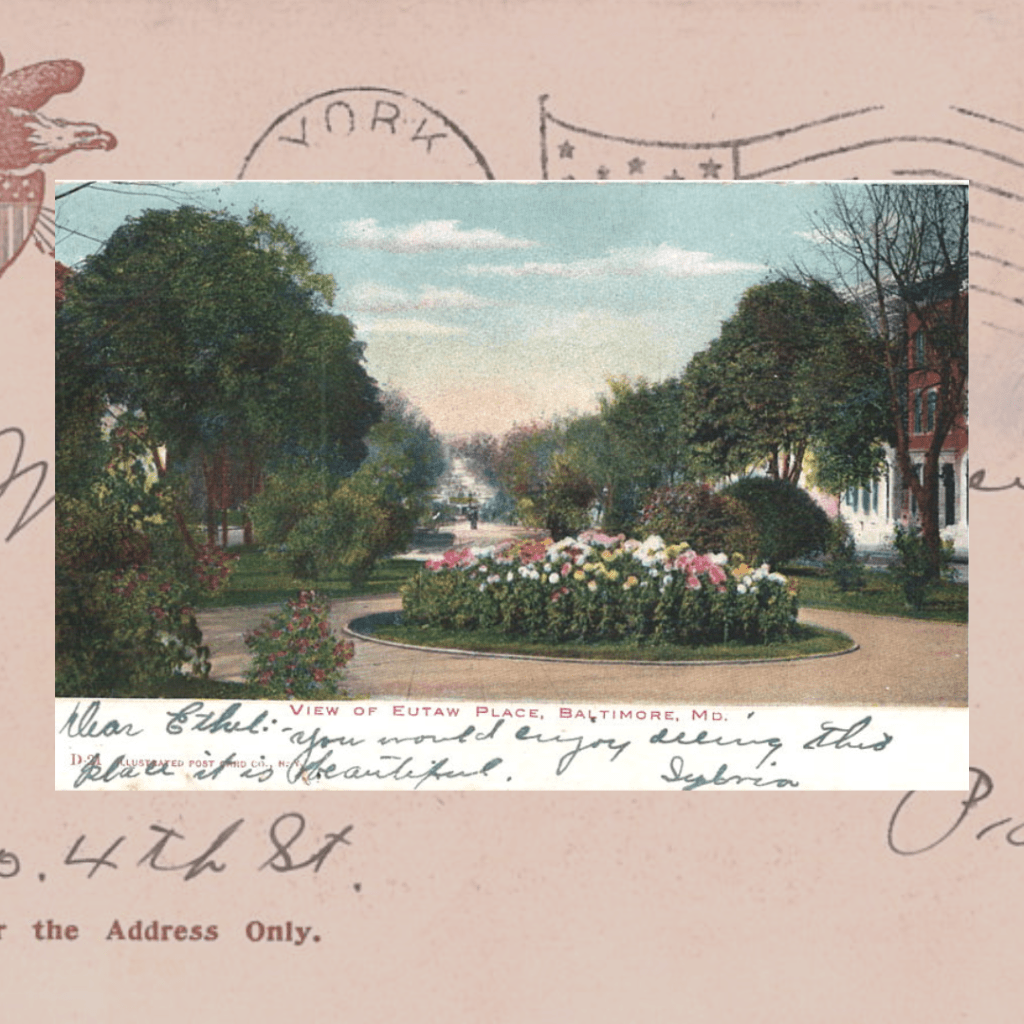
You would enjoy seeing this place it is beautiful.

Sylvia

For the very few of you who are avid followers of my blog, you’ll notice something right off the bat about this postcard. If you’ve recently started following me, fret not sweet friend because you’re about to learn something that *may* help you win a random trivia night.

For those of you who don’t already know, the unique thing about this postcard is that the text is written on the front. Therefore we know that this is part of the “Post Card Period”. Simply put, the period between 1901 and 1907 where it was prohibited to write anything other than an address on the back of the postcard.

Although the postmark date is unreadable, my estimate is that the postcard was written somewhere between 1905-1910. Yes, I’m dating it after the divided back period began, because as we’ve seen before, just because you could write on the back of postcards beginning in 1907, didn’t mean everyone did.

Despite the short message, it truly is a lovely postcard. That’s likely one of the reasons Ethel kept it, and why it’s survived for over a hundred years. The soft glow of the sunset (or sunrise) in the background mingles with the bright cheeriness of the flower arrangements. I love the thought of the postcard itself exchanging hands time and time again, all of us agreeing with the sentiment of the sender.

But who was Ethel Maurey? And who was Sylvia? Well, it turns out I found both of them!

Ethel was born in Sunbury, PA in May of 1892 to Henry and Emma Fritz Sanders Maurey. That would put her anywhere between 9 and 15 during 1901-1907. Based on her obituary, Ethel led a life of great service, raised two sons (though one predeceased her) and was married for 56 years to Jesse Lloyd. Obituaries are difficult, because there’s so much left unsaid. We can’t know the day to day of her life. But we do know she lived through two major wars, could cast her first vote at the age of 28 (!!) and witnessed the assassination of JFK, the Civil Rights Movement, and the first man walk on the moon. Interesting indeed.

And what of Sylvia? Well, if my gut is right, Sylvia is actually Sylvania Maurey, Ethel’s sister. Sylvania was born in 1880, which made her 12 when Ethel was born. Why was Sylvia in Maryland visiting Eutaw Park? I’m not sure. The area still exists as an architectural district that housed many important residents at the turn of the 20th century. Was Sylvia visiting a friend? A college? Was she simply on a trip? Unfortunately the postcard doesn’t tell us.

However, it stands as a testament to the bond of the two sisters. Despite their age gap, Sylvia took time out of her trip to send a quick, and stunning, postcard to Ethel. Because of her bond with Sylvia, Ethel kept the card likely until the day she died. It took another 50+ years to make it into my hands. Which, frankly I find miraculous and serendipitous. It’s as though Ethel and Sylvia wanted me to share their bond with you, my dear readers. So, as you go about your day, think of Ethel and Sylvia, and reach out to your sibling, or best friend, or parents. I think they’d be glad you did.

Back of Postcard with Ethel’s address

Categories
Education family History Photographs Postcards Teaching Vintage Writing Prompt

Elsie Murphy: Blushing Bride Turned Grieving Widow: The Story of Elsie Murphy

To: Mrs. Elsie Murphy. From: Jan, 1950

June 25, 1950

Dearest Honey,

I spose you know by now that I’m in Lancaster for a few days. I left Fri. on the 4 o’clock Zephyr. I leave just as you get home! How do you like that (ha). I’ve got a surprise for you when I get home. Did Dee call you? Or did you call the store? Bet you had fun at Cletek!(?) I got some sandals in Prairie du Chien. I’ll see you Wed. You probably won’t get this till after I’m home! did you go to the prom?

Love,

Jan

P.S. I got my phone call.

In 1950, World War II still loomed large in the proverbial rear view mirror of the United States. Harry Truman was President, the Korean War was just beginning, Joseph McCarthy — a Senator from Wisconsin — believed that Communists were everywhere, and Albert Einstein warned that nuclear war would lead to mutual destruction. It was somehow both a time of great change and stagnation. Technology was advancing at a frenzied pace, but Americans were frightened of the monsters they so eagerly created and sought ultimate control.

When I read this postcard I was positive it was a letter from a husband to a wife. From the salutation (Dearest Honey) to the squished signature — which I thought was “Jon”. At first glance, it was innocuous. A man sharing somewhat mundane stories and promising a surprise.

But under close examination the signature I thought read “Jon” was in fact more likely “Jan.” Things clicked for me after that. The tone of the card is what I would call “gushing“. There are many incongruent thoughts spilled out over the white space of the card and it’s as though Jan had so many things to tell Elsie that she needed to tell a little tidbit of all of it and spare all the details.

Once I ascertained that the card was from Jan, I started looking for Elsie. I found quite a few Elsie Murphy’s floating around. There was even a promising obituary of an Elsie Murphy with a daughter named Dee, but she lived her whole life in Maine — so couldn’t be our Elsie. Finally, I decided to try Elsie’s name and address, and immediately got a hit on a newspaper article from the Library of Congress. It states:

Shown receiving the Bronze Star Medal awarded to her husband, Cpl Robert V. Murphy, is Mrs. Elsie E.Murphy, 1209 South Cedar Lake Road.

This is, unquestionably, our Elsie. The record is amazing, because for the first time I was able to find an image of one of our recipients as she probably looked around the time she received the postcard. A little bit more digging uncovered the 1950 census reports from Minneapolis. It seems after her husband passed away, or perhaps even when he had been in war, Elsie lived with her parents in the Cedar Lake Road house. In 1950, she was listed as 31, Widowed, and working full time as a typist at a publishing company.

Now that I had Elsie and her husband’s name, I started searching for him. It seems Robert V. Murphy was killed in action in Germany during WWII. He was born in North Dakota and only went to Minneapolis in May of 1942. Did he meet Elsie there? How long did they have together before he deployed? Like so many other young couples, did they have a heated romance and marry quickly because of the threat of war?

And who was Jan? A friend Elsie met at her job as a typist? A school friend? A cousin? What was the surprise Jan had for Elsie? What was Jan’s phone call?

All of this from one little postcard. The story is fascinating, and I have a deep desire to find Elsie’s obituary. Despite all the Elsie’s I looked at, I don’t believe I found our Elsie. This tells me she likely remarried and was not buried under the Murphy name. I have to wonder how she managed to press on in her grief. Especially because Robert’s body was never recovered. She’d become a blushing bride only to become a grief stricken widow. I know I’ll be thinking about Elsie, her life after the war, and Jan’s sandals for a long time to come.

Front of Postcard: Grant County Court House, Lancaster Wis.

Categories
Education History Photographs Postcards Teaching Vintage Writing Prompt

“Hello Chimmie”: Insights into Childhood Friendship at the Turn of the 20th Century

Miss Dorothy Termansen, 1910. Sender Unknown

Hello Chimmie,

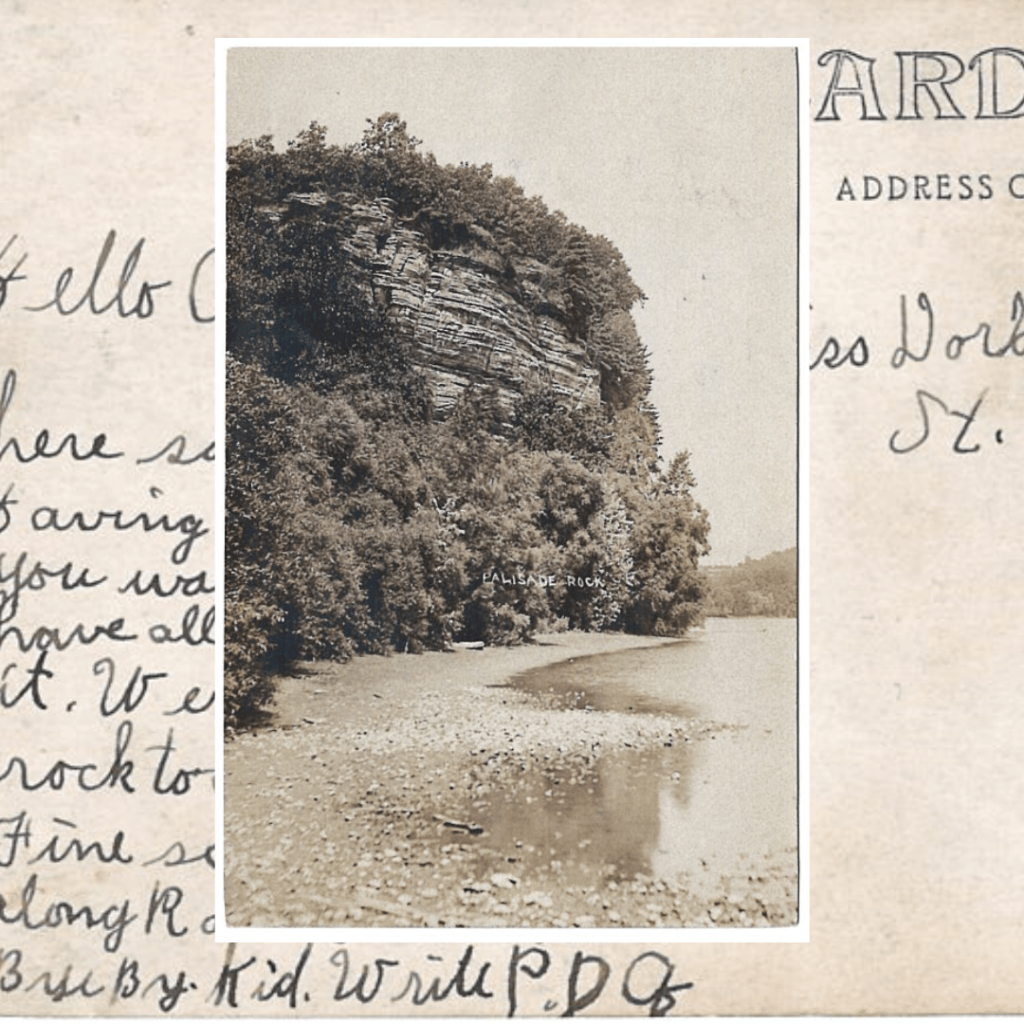
We got here safe and sound. Having a fine time. I wish you was here we would have all the more fun ain’t it. We are going on this rock today. It is 100ft high. Fine scenery out here along Rock River. Well bye by kid. Write P.D.Q.

1910 had already been a lion of a year by the time October arrived. In July, race riots broke out all across the nation after African American boxer Jack Johnson defeated James Jefferies in a heavyweight boxing match. In August, a wildfire devastated large swaths of the Pacific Northwest, and on October 1, the LA Times was bombed. A tragedy that resulted in 21 deaths and multiple more injuries.

Although we know that this postcard was sent to Minnesota, what’s less clear is where it was sent from. The ink on the postmark is either worn down, or was never there in the first place. So it’s hard to tell how much the events of the nation impacted both our sender, and the recipient. Though, there is a spot in Minnesota called “Palisade Head” which looks similar to the photograph on the front of the card. But, Rock River flows out of Wisconsin, so maybe they are there? Hard to know. I’d love to hear any information any of you might have.

Though we don’t know the place, I’d wager a tidy sum of money that the sender and Dorothy were children. Maybe siblings or cousins or friends from school. If this is the case, they would have likely existed in the sort of bliss that stems from being protected and somewhat oblivious to the events of the surrounding world. Especially since our sender seems to be on a vacation.

This postcard speaks oodles to me, especially because of how familiar the sender seems to be with Dorothy. From the pet name “Chimmie” to the gentle urging to write “P.D.Q” (or pretty darn quick). The card reads more like a note my students might write to each other complete with it’s own lingo and poor grammar. “I wish you was here, we would have all the more fun ain’t it” tells you this card was not meant for adults. It was a gesture of friendship and love from one friend to another.

As for Dorothy, I had a bit of a difficult time finding her. I found a few Termansen’s, but none that would fit our Dorothy. I’m fairly certain I have the last name correct and although the sender sounded Dorothy’s name phonetically (Dorathy), I’m also pretty sure it’s actually “Dorothy”. Though it is possible that was a middle name. Well. That’s the way it goes sometimes.

Overall, this postcard is a fantastic peek into the everyday lives of children living in a changing world.

Categories
Education History Photographs Postcards Teaching Vintage Writing Prompt

Visiting Miss Evelyn Isensee in 1952: A Glimpse into Mid-Century American Life

From: Adeline. To: Miss Evelyn Isensee, 1952

Hi!

Have been so busy. I’m afraid I’ll get there before my card does. Mother seems to be feeling better. Truly hope it lasts. Be seeing you soon.

Love,

Adeline

In 1952, Harry Truman was president, Academy awards went to An American in Paris and A Place in the Sun, the United States detonated the first hydrogen bomb in the Marshall Islands, and radar tracked UFO’s over Washington D.C. Though Hollywood Directors shot their films in the lurid brightness of Technicolor, the Cold War cast a long shadow over America.

In August, however, Adeline planned on visiting Miss Evelyn Isensee. Green Lake, WI is only about an hour and a half by modern car from Madison. In the 50’s, this wouldn’t have been an extremely arduous journey — other than Adeline likely didn’t have air conditioning on the drive there. It makes sense, therefore, that she expected to see Evelyn before her card arrived.

What’s interesting about this postcard is that it functions much like other, older postcards. Most of the written space is taken up with information about family (Mother seems to be feeling better…). The card also alerts Evelyn to Adeline’s visit, though it’s not the main reason for the card.

It’s a commentary on how society was beginning to change. The telephone was common in the 1950’s, so there’s an expectation that Evelyn already knows Adeline is gong to visit. We can surmise that information was probably delivered over the phone. However, despite quicker means of communication, it was still common — and much more personal — to drop a line to a friend or loved one. Which Adeline chose to do in the muggy summer of 1952.

As for our friend Evelyn, at first I was sure I wasn’t reading the name correctly. Isensee didn’t quite seem like the correct last name, yet when I searched for her, two obituaries quickly popped up. The first didn’t match (last name by marriage, not by birth). The second, however, seems like it could be our Evelyn.

If so, she had quite an illustrious career. She worked for the Federal Government in both Madison, WI and Washington D.C. If the woman I found is our Evelyn, she would have been 32 in 1952, so I have to say that the timing feels a little off (since she was still a “Miss”). The obituary also does not list an Adeline as a sibling. It’s feasible that Adeline is a cousin or even close friend, but I still feel like some pieces to the puzzle are missing. Yet, the obituary did say Evelyn worked in Madison for part of her career, so the dots certainly line up even if they don’t make a complete picture.

Nonetheless, it’s a lovely postcard. The front depicts the Roger Williams Inn. Built in the 1930’s, it displays the beauty and engineering of the United States, something we prided ourselves on in the 1950’s. Progress, progress, progress. It must be demonstrated even on the postcards sent to loved ones.

Or perhaps the truth is much more boring. Perhaps it has nothing to do with the Cold War or America’s need to best Communism through architecture. Perhaps Adeline was on a longer journey and stopped over at the inn for a night or two. Deadly dull, but such is the way of life.

Roger Williams Inn From the Lake”

Categories
Education family History Photographs Postcards Vintage Writing Prompt

The Enigma of Miss Laura Hanson’s Wintery 1909 Postcard

Miss Laura Hanson, 1909

Hello kid,

How do you like this wintery weather, I don’t like it one bit. I am in Atwater now just reddy to go home.

As ever —

By November of 1909, William Howard Taft was President, the NAACP had been founded, and the United States chose Pearl Harbor as a military site. The Progressive Era was in full swing with politics aimed at making life a little easier…for some.

Despite long remembered political events, everyday life continued to plod forward for the citizens of the country. Such is the case for Miss Laura Hanson and the mysterious sender of her postcard. The card indicates wintery weather — which I interpret to be early(ish) cold, ice, and snowfall.

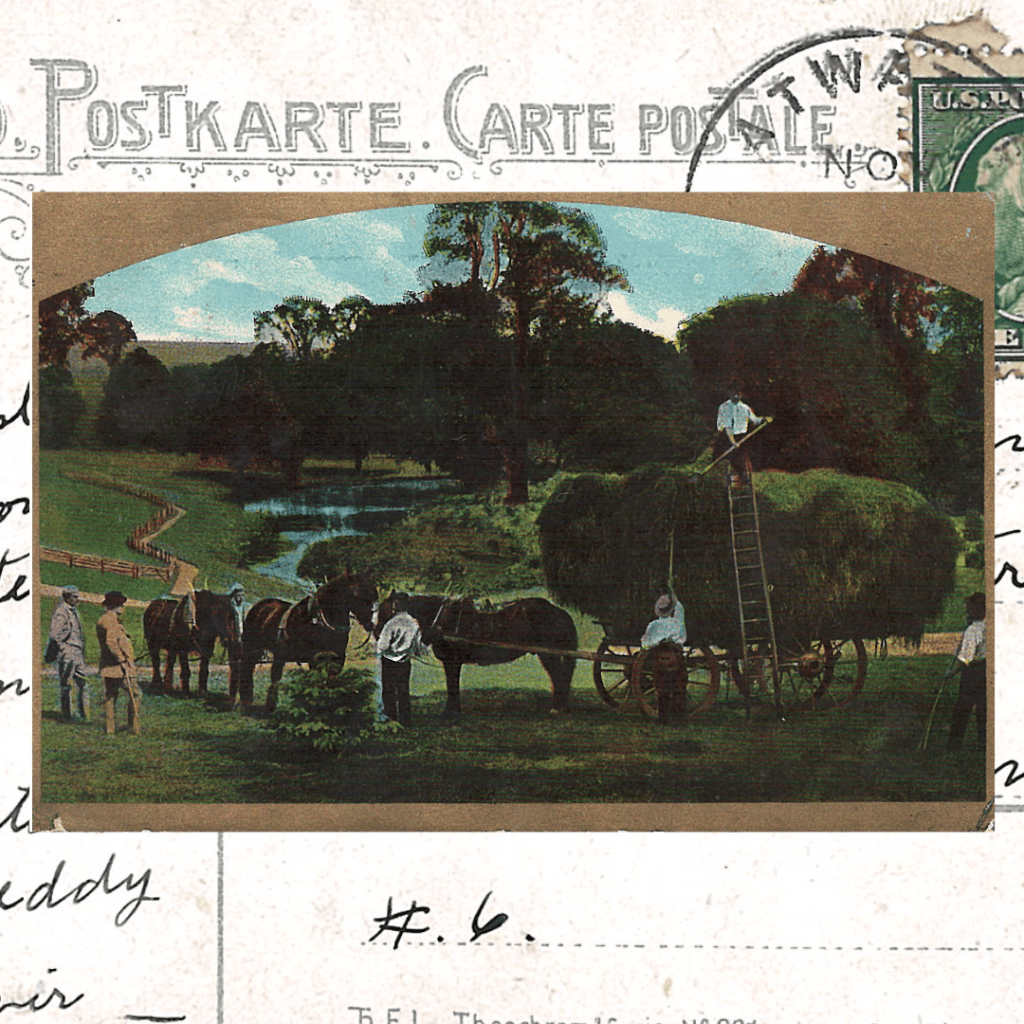
Atwater is a small town in the middle south of Minnesota settled by Scandinavian and German emigrants. In 1909, it was a bustling railroad town, though it’s commerce also relied heavily on farming. By November, it would have been time to hunker down, warm up, and get through the cold. This attitude feels apparent in the card. On the weather, our sender indicates “I don’t like it one bit.” Perhaps that’s why they chose the colorful farming scene — to remind them of warmer times.

Since the sender didn’t sign a name, it’s impossible to know who they were or what their relation to Laura might have been. I did find a Laura Hanson born in a different city in Minnesota in 1896. It’s feasible that her family moved to Atwater after her birth. The timeline also fits, as this Laura would have been thirteen in 1909. The “Hello Kid” moniker feels appropriate for a younger family member. Perhaps the sender was an older cousin or family friend?

Though, I find it interesting that the card was *sent*, especially since the sender is in Atwater. The entire tone of the card is conversational and familiar, but there’s seemingly no meet-up planned. Was the sender a railroad worker only in for a night or two before leaving? Surely if the post could get to Laura, the sender could have gotten to Laura, unless of course they were working and had no time. It’s a bit of a mystery to me, because the sender is well known enough to leave off their name, but also is sending a card in lieu of a visit. Maybe it’s her father?

Is the Laura I found our Laura? Was she friends with the sender or family? I suppose we will never know. But, I can imagine her reading the postcard in the cold blue light of winter and wishing for spring to come again.

Front of Postcard

Categories
Education History Photographs Postcards Teaching Vintage Writing Prompt

A Glimpse into Historical Transitions and a Serendipitous Find

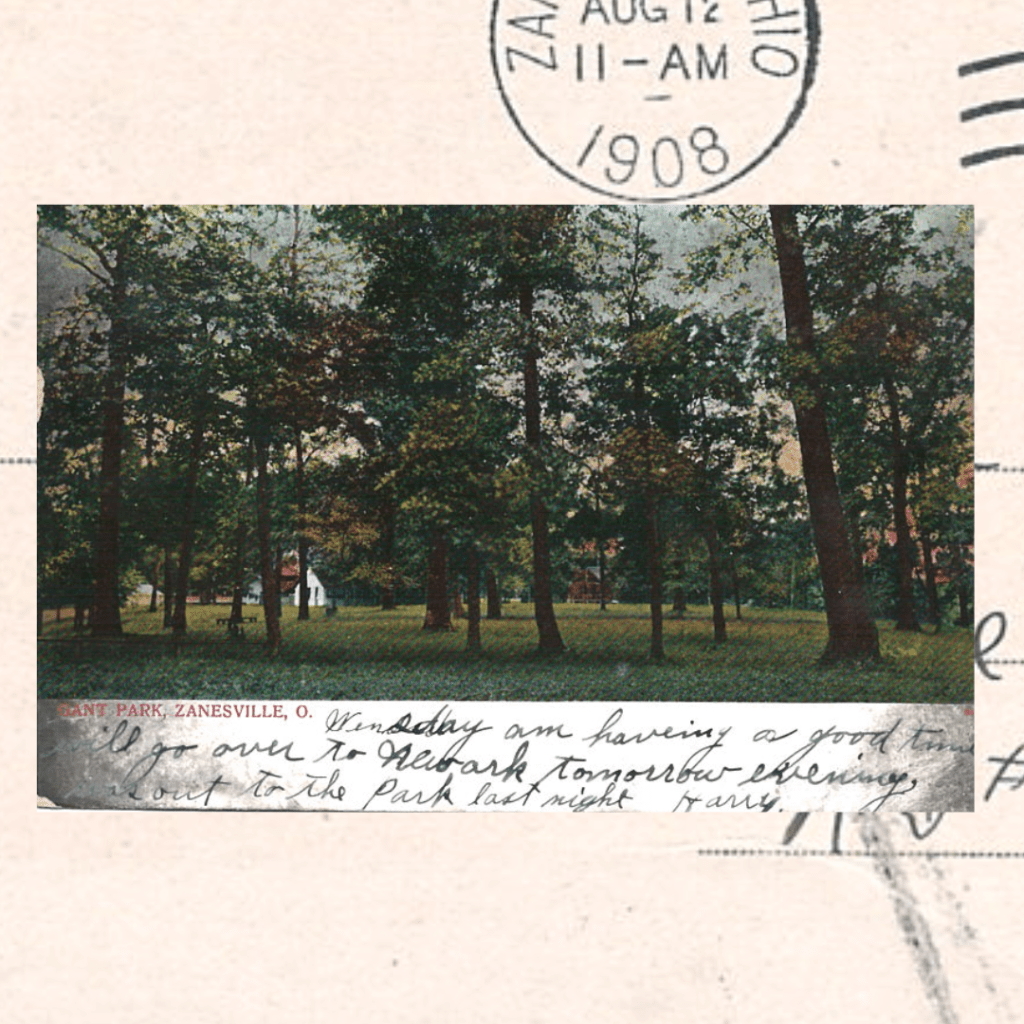
To: Miss Anna Johnson. From: Harry. 1908

Wensday (misspelled but an attempt at correction),

Am having a good time. Will go over to Newark tomorrow evening. Was out to the park last night.

Harry

1908 is a year oft discussed on this blog. I tend to gravitate toward postcards that are turn of the 20th century, so I have a lot of 1907-1911 postcards (though I’d love some WWI and late 1800s postcards). As a reminder, Theodore Roosevelt was in his last year as president, the Model T was rolling off the production line, and the Wright brothers were demonstrating flight.

I’ve dropped us into history, now…on to the postcard.

Prior to 1907, senders of postcards were not allowed to write on the back, or address side, of the postcard. Therefore, any message they wanted to send had to go on the front of the postcard. During this period the space for writing was often limited and cramped. This is the “undivided back period.”

After 1907 we enter the “divided back period.” This is where we get the postcard format you’re probably most familiar with: a message and address on one side, a photo or some sort of artwork on the other.

This postcard is sort of a transition postcard. By 1908 it was legal for senders to write messages on the address side of the postcard, but clearly not all postcards were being made with a “divided back.” It’s sort of like when cars and horses and buggies all existed at the same time. Or cell phones and pagers. Or blackberries and Iphones. Or…have I aged myself?

Anyway, it’s fun to see a transition period piece like this. There’s a beautiful image of Gant Park in Zanesville, Ohio, but also a small space on the bottom that the sender can use to write a brief message — which Harry chose to do.

I was unable to confidently find Anna Johnson. There are a few contenders, but none I was positive was our Anna. However, it’s clear that Harry went to Gant Park. This is a piece of land in Zanesville that was created by Nelson T. Gant and though I couldn’t find Harry or Anna, Nelson is an interesting fellow.

Nelson Gant grew up enslaved on a tobacco plantation in Virginia. There he lived, and married, and eventually gained freedom in 1845 when his enslaver died. Unfortunately, his wife was enslaved by another family, so when Gant came to Ohio, he did so without his wife. Eventually, her purchased her out of enslavement in 1847. He’d later become a respected citizen of Zanesville, and provided the park as an integrated space for picnics, baseball, and even circuses.

Every postcard gives us a glimpse into the lives and thoughts of the senders and recipients. However, they also offer us historical bits of information that we’d never otherwise learn about. I wish I knew more about Harry’s visit. What was the park like when he was there? What were his thoughts? Why was he in Zanesville? But because his card survives I managed to learn about the remarkable life of an enslaved man turned underground railroad conductor who donated a place for everyone to come together. That, in itself, is remarkable.

Front of Postcard: Gant Park, Zanesville, Ohio

Categories
Education History Photographs Postcards Teaching Vintage Writing Prompt

“You can’t get away from the fools”: Dust Bowl, Outlaws, and Dunderberg Peak

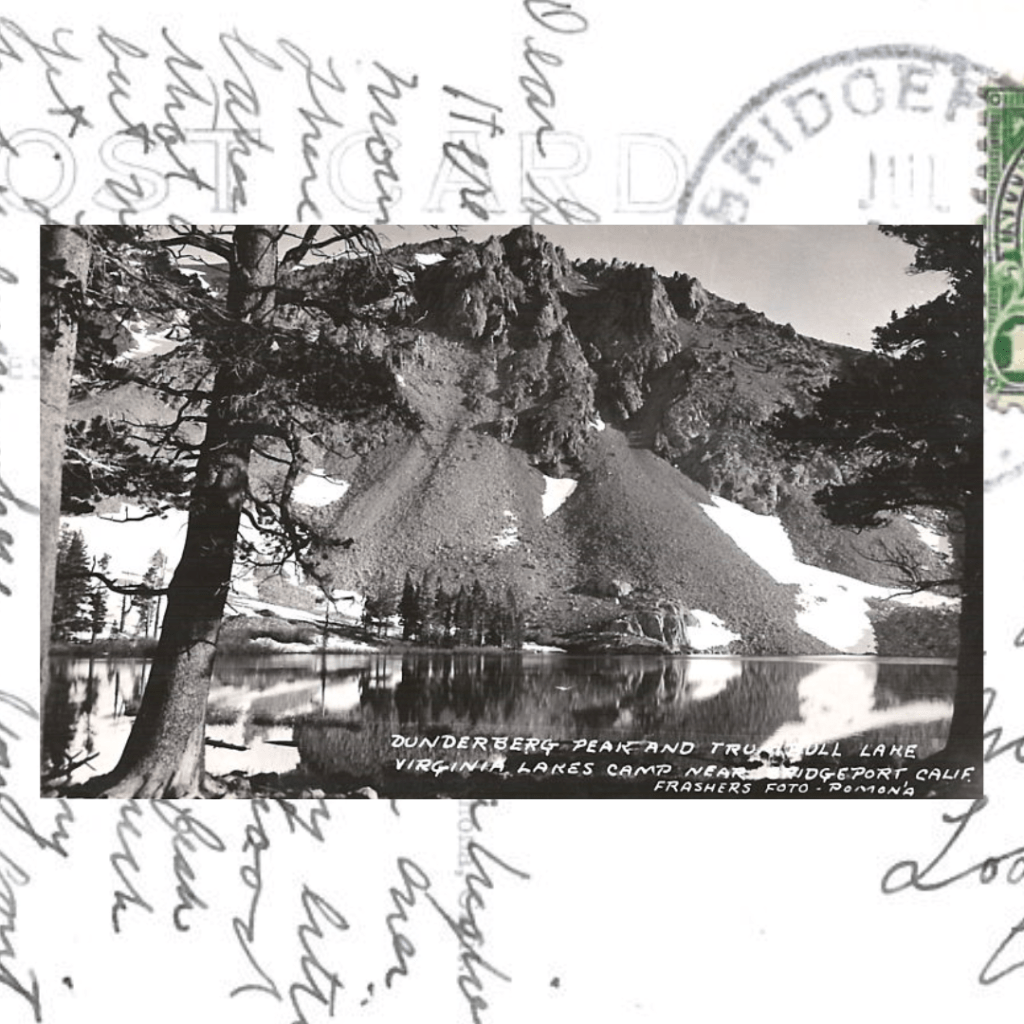
To: Mr. and Mrs. Edgar Peck. From: George, 1934

Dear Gertrude and Edgar,

Here we are up in a higher mountain range than ours. There are a great many little lakes in the neighborhood that are said to have fish but we have had no luck, people everywhere. You cant get away from the fools. I expect to be home in about one week, but am not sure yet. We are having the wonderlus(?) good time.

Goodbye,

George

The summer of 1934 saw one of the worst droughts in history of the United States. All I need say is “dust bowl” to conjure up images of what life was like for those living in the midwest. “Black blizzards” reared up, their effects deadly for those in the dustbowl states, but thier dust also reached as far as Chicago and New York.

On May 23 of 1934, Bonnie Parker and Clyde Barrow were killed on a highway in Louisiana. In June, John Dillinger was considered public enemy number one, and Adolf Hitler used his political power to murder opponents in the “Night of the Long Knives.” In the wake of all this, at least prohibition was over and people could drink about their worries.

In the midst of Depression Era trials and tribulations, it’s difficult to imagine people going on vacation. From the time we learn about the Depression we are inundated with pictures of great sadness and poverty. We don’t typically think of fresh mountain air and crisp lakes teeming with people. Yet, this postcard provides a snippet of what living life was like in 1934.

Dunderberg Peak is situated in the Sierra Nevadas on the border of California and Nevada. Google Maps says it’s roughly 61/2 hours from Los Angeles. Obviously, it’s unclear whether George and his companions drove, took a train, or both. However, I suspect it was still quite the trip for them. What’s interesting to me is that he wasn’t sure when he was returning, exactly. Is this because he was out of a job? Was it a summer vacation? It’s strange in today’s over scheduled era to have the flexibility to return in “about” a week.

Additionally, how many times have you heard recently that something is simply “too” crowded? I feel like I hear it all the time. In the social media era where places and experiences go viral everyday, it feels like all the “good” places are inundated with “fools you can’t get away from.” Yet, here is a card sent in the middle of the Depression that’s got the same gripe as so many of us. Like I say all the time, our lives are so similar to those who have come before us. It never ceases to amaze me.

I wasn’t able to easily find Gertrude or Edgar Peck, though I’m short on time so I admittedly didn’t look super hard. However, it’s nice to know that George’s marvel at the beautiful nature that surrounded him, as well as his annoyance at crowds, will echo across history and remind us that we are all connected.

Front of Postcard

Categories
Education family Photographs Postcards Teaching Vintage Writing Prompt

1951 Split Rock Lodge Vacation: A Glorious Retreat

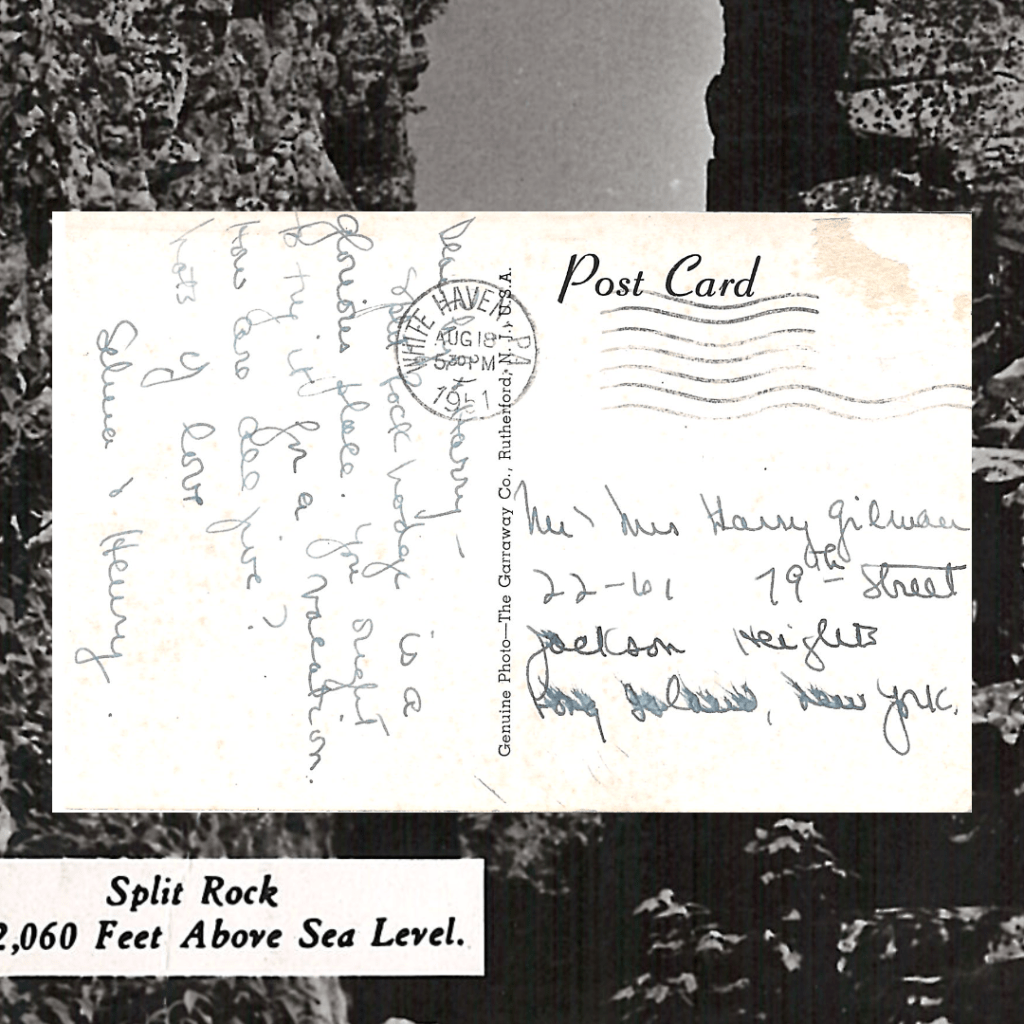
To: Mr. and Mrs. Harry Gilwar(?). From: Selena and Harry, 1951

Dear Harry,

Split Rock Lodge is a glorious place. You ought to try it for a vacation. How are all five(?).

Lots of love,

Selena and Henry

In 1951, the United States was embroiled in the, perhaps lesser ‘known,’ Korean War. Which, of course is an extension of the Cold War. Harry Truman was President, and the world had officially entered into the nuclear age. On March 29, Ethel and Julius Rosenberg were convicted of espionage, The King and I opened on Broadway, and All About Eve won best motion picture at the Academy Awards.

In July, 4,000 whites in Cicero, Illinois attacked an apartment building because it housed a single black family, sparking the Cicero Race Riot. July also sees the release of Salinger’s A Catcher in the Rye, as well as Disney’s Alice in Wonderland.

So when Henry and Selena took their vacation to Split Rock in August of 1951 the writhing ferment of change was coming to the United States, but it was creeping slowly, and wasn’t here quite yet. At least not for people who had the privilege of going to the Poconos on vacation. For them, it was likely a peaceful retreat from the tumult of the late 40’s.

Split Rock Lodge is settled in the Poconos mountains in Pennsylvania. Built in 1941, it was opened as a vacation destination in 1946. Though the original lodge burned down in a fire in the 1970’s, it was rebuilt and remains as a vacation destination for families. However, it must have been grand in the 50’s. Brand new construction, hiking trails to explore, fresh, crisp air. It’s no wonder Henry called it a “glorious place.”

By the 1950’s most postcards transition from imparting critical family information to displaying the trappings of luxury. In a world where social media didn’t exist, how could people show off their glorious vacations to their friends? POSTCARDS! And that’s exactly what Selena and Henry are doing. Showing off. I don’t blame them, I post pictures of my vacations on social media, too.

Unfortunately, I wasn’t able to find Mr. and Mrs. Harry Gilwar(?). I suspect it’s because I’m not entirely sure of the last name. It’s too bad, especially because it’s recent enough that I thought I’d get an obituary and maybe some pictures. Ah well, that’s the way it works sometimes.

On the back of the postcard you can see that it’s a “genuine photo” postcard. I don’t know enough about real photo postcards to know if this is a reproduction, or if it’s an actual picture of Henry. However, people did have the option of turning their pictures into postcards and sending them in the mail (sort of like our Christmas cards from Costco ahahha). I like to think that this image is our friend Henry staring at us from the past and urging us to get outdoors and try Split Rock as a vacation. I’m sure it will be glorious.