Categories
Climate Education family History Photographs Postcards Teaching Vintage writing

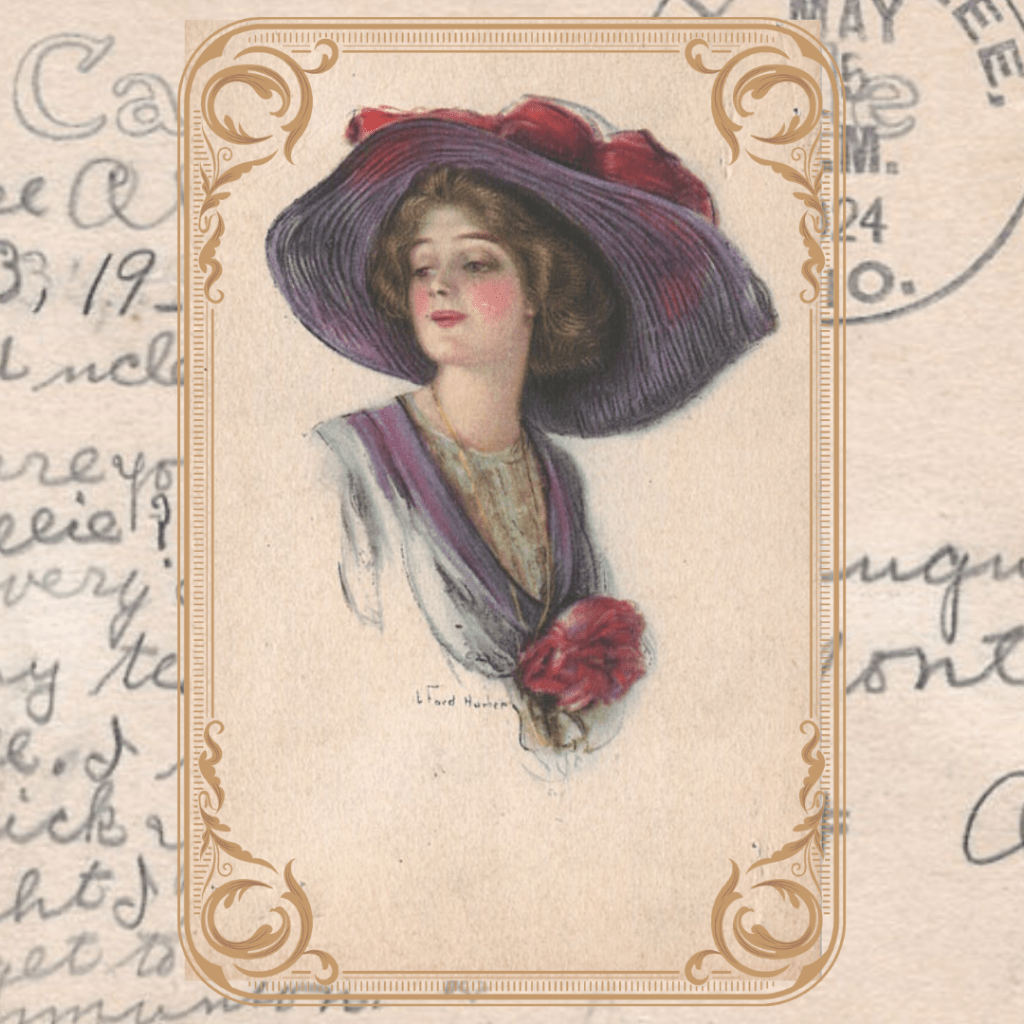
Celebrating a Roaring 20’s Birthday: Warren Spitler’s Legacy and the Mystery of Effye

To: Mr. Warren Spitler From: Effye 1920

Am having the time of my life. Can you find me on the beach? Come down, the water is fine. All well and able to sit up an take notice.

Effye.

The 1920 census was the first census to record a population of over 100 million in the United States. 192o was the ACLU was founded, and Congress decided not to join the League of Nations. By August 26, the 19th Amendment of the Constitution was passed, granting women the right to vote. Racial tensions, however, ran high in the nation. Lynchings occurred in throughout the year in both the North and the South. The Roaring Twenties had truly begun.

If you’ve followed my blog for a while, you may recognize this card. This is one of the first cards I posted, and I didn’t research it. Since I had a bit of a late day at work, I decided to revisit the card and do a little bit of research. I wasn’t sure I’d be able to find anything — as you know that’s how the jelly rolls sometimes, but I like the art on this card. I think it’s beautiful and I love the beach scene. So, I figured I’d give it a go.

Imagine my surprise when I easily found a Warren Spitler in the family search records. Even stranger, Warren was born on September 18, 1884. The post date of this blog will be the anniversary of his 140th birthday! I’m a bit of a superstitious gal, and I can’t help but think Warren may have had something to do with the timing. Let’s get into it.

As I said, Warren was born on September 18, 1884 in Augusta, Virginia. There’s no (accessible) information on him until the 1930 census, which places him in Covington. He was 45, and living with his brother and his brother’s family. He’d remain there in the 1940 census as well. Both the census records and Find a Grave indicate that he was a salesman in a department store, though was type I don’t know.

It seems that Warren never married, so I wondered who Effye may have been and what relationship the two of them had. I thought perhaps a sister, though there was none that stood out as having the nickname Effye. There is an Abbie, so maybe that’s it? The handwriting also seems a bit childish to me, so I thought niece perhaps? But, searching through the family tree I can’t find many of his siblings who married. If you note the grave, Warren is buried next to his brother Clarence, also unmarried. I didn’t go deep into the family tree, but there weren’t many nieces or nephews to be found.

So, who is Effye? Is it a nickname for a sister or a niece? Is it a friend of Warren’s, or perhaps even a cousin? There’s a few cousins that could fit the bill, but again I came up short. Still, I hope that Warren found time to “sit up and take notice” on the beautiful beach with the people he loved.

Happy birthday Mr. Warren Spitler!

Front of Postcard, 1920
Categories
Education family History Photographs Postcards Vintage Writing Prompt

“Dear Uncle Gust”: A Charming Glimpse of Innocence and Family Ties

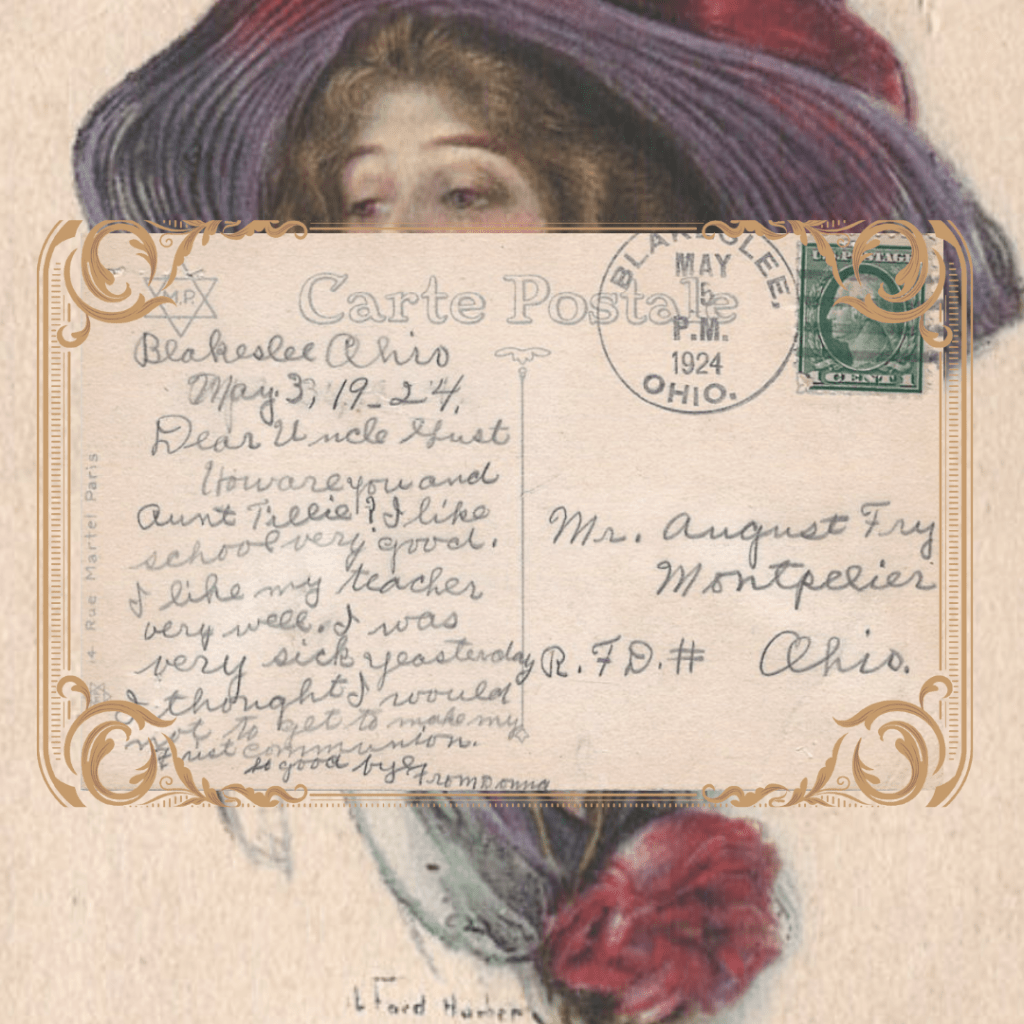
To: Mr. August Fry. From: Donna. 1924

Blakeslee Ohio

May 3, 1924

Dear Uncle Gust,

How are you and Aunt Tillie? I like school very good. I like my teacher very well. I was very sick yesterday. I thought I would not to get to my first communion.

So good bye.

From,

Donna

In the United States, the 20’s were a relatively prosperous time. World War I was over, our production was booming. Movie stars graced the silver screen, roads began to stretch across America, and shopping became an experience. On May 4, 1924, the Summer Olympics opened in Paris — a fun coincidence since the games have returned to Paris 100 years later.

At the time that Donna wrote her card to “Uncle Gust,” Calvin Coolidge was president, Adolf Hitler had begun his jail term for the Beer Hall Putsch (he would serve 9 months), and the Soviet Union was in the process of becoming recognized as a nation. Though things were looking bright, there were ominous signs on the horizon.

But, not for little Donna, eight years old and living in Blakeslee, Ohio. For her, the glittering lights and industry hadn’t reached Blakeslee, Ohio, a small village of primarily German and French immigrants in the Northwest corner of Ohio. Currently, it houses some 100 odd people. In 1924, it was much the same, though it grew because of the railroad that went through town.

There’s something perfectly sweet about this postcard. Here we have a young niece not far from her uncle (roughly ten miles), but still far enough that a postcard is warranted. Further more, she calls him “Uncle Gust” which is adorable. AND, she has an Aunt Tillie? Fantastic. This postcard holds all the innocence of childhood: school, sickness, fear of missing something important, stilted, yet careful writing. It conjures an image of a little girl sitting in her room carefully and dutifully writing out the postcard, perhaps with her tongue sticking out of her mouth, maybe by candlelight. Even in the 30’s most rural spaces had yet to be strung up with electricity.

I’ve also had quite a stroke of luck in researching our sender and recipient. I found August AND Tillie Fry (or at least their graves). According to find a grave, August was a veteran of World War I, and raised dairy cows on a farm in Montpellier, Ohio. In 1924, he was 35 years old and Tilli 34. According to their find a grave, the two were married in 1922 and went by “Gust and Tilli.” There are pictures on the website, and they look like a beautiful couple.

And I even found Donna! This is a first for me, as I’ve never been able to find everyone listed on a postcard, however after some digging through the family tree, I found our postcard writer. She was blood related to Tillie. Her mother, Viola Elizabeth Walley Wherle, was Tillie’s older sister. Donna was an only child, and raised on a farm in Blakeslee. Donna grew up to have two children and was beautiful. I’ve linked her information a few times, but if you are interested, you can do a deep dive on her family tree here.

It’s so rewarding when I’m able to find a bit of information about my senders. I feel so privileged to be the custodian of Donnas hopes, worries, and childish scrawl, and I know I will continue to think of her writing a postcard to her Uncle Gust and Aunt Tillie.

Front of Postcard. A beautiful watercolor.

Categories
Education family Photographs Postcards Teaching Vintage Writing Prompt

1951 Split Rock Lodge Vacation: A Glorious Retreat

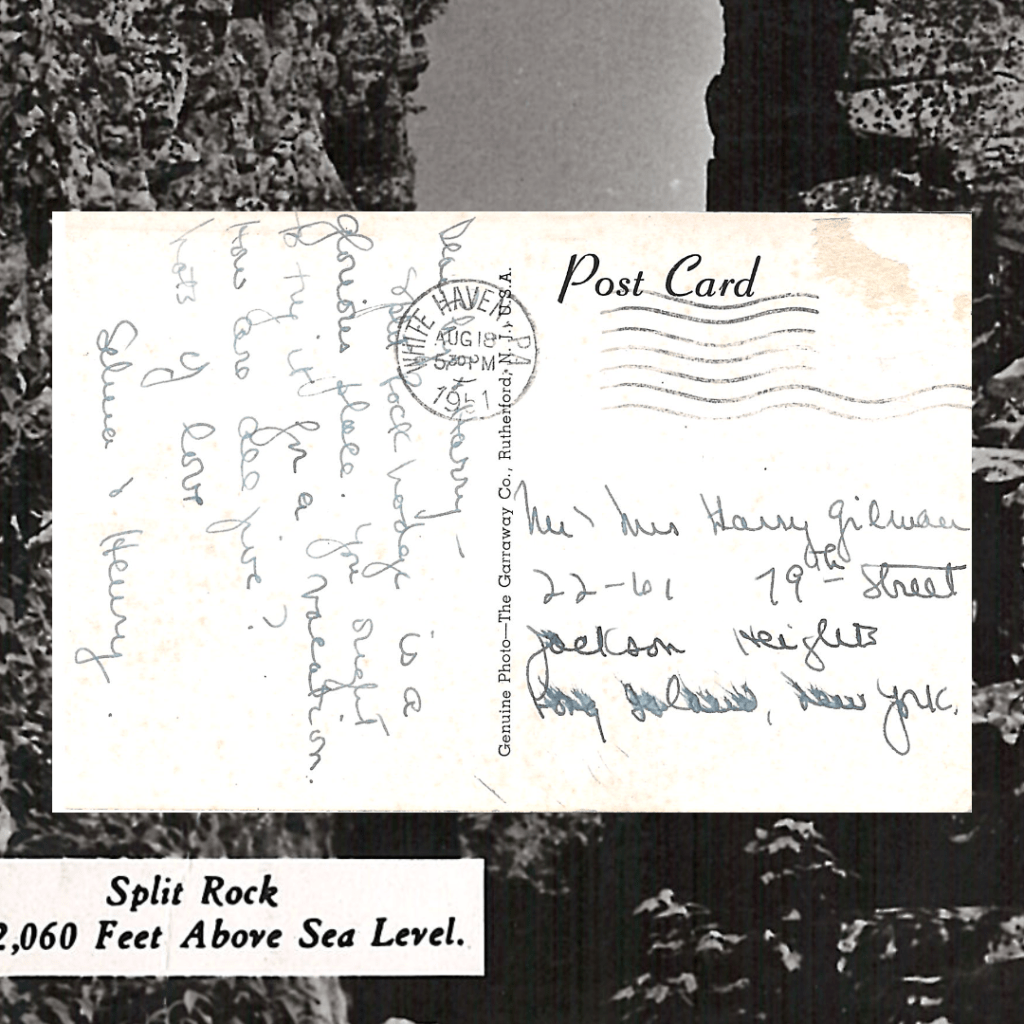
To: Mr. and Mrs. Harry Gilwar(?). From: Selena and Harry, 1951

Dear Harry,

Split Rock Lodge is a glorious place. You ought to try it for a vacation. How are all five(?).

Lots of love,

Selena and Henry

In 1951, the United States was embroiled in the, perhaps lesser ‘known,’ Korean War. Which, of course is an extension of the Cold War. Harry Truman was President, and the world had officially entered into the nuclear age. On March 29, Ethel and Julius Rosenberg were convicted of espionage, The King and I opened on Broadway, and All About Eve won best motion picture at the Academy Awards.

In July, 4,000 whites in Cicero, Illinois attacked an apartment building because it housed a single black family, sparking the Cicero Race Riot. July also sees the release of Salinger’s A Catcher in the Rye, as well as Disney’s Alice in Wonderland.

So when Henry and Selena took their vacation to Split Rock in August of 1951 the writhing ferment of change was coming to the United States, but it was creeping slowly, and wasn’t here quite yet. At least not for people who had the privilege of going to the Poconos on vacation. For them, it was likely a peaceful retreat from the tumult of the late 40’s.

Split Rock Lodge is settled in the Poconos mountains in Pennsylvania. Built in 1941, it was opened as a vacation destination in 1946. Though the original lodge burned down in a fire in the 1970’s, it was rebuilt and remains as a vacation destination for families. However, it must have been grand in the 50’s. Brand new construction, hiking trails to explore, fresh, crisp air. It’s no wonder Henry called it a “glorious place.”

By the 1950’s most postcards transition from imparting critical family information to displaying the trappings of luxury. In a world where social media didn’t exist, how could people show off their glorious vacations to their friends? POSTCARDS! And that’s exactly what Selena and Henry are doing. Showing off. I don’t blame them, I post pictures of my vacations on social media, too.

Unfortunately, I wasn’t able to find Mr. and Mrs. Harry Gilwar(?). I suspect it’s because I’m not entirely sure of the last name. It’s too bad, especially because it’s recent enough that I thought I’d get an obituary and maybe some pictures. Ah well, that’s the way it works sometimes.

On the back of the postcard you can see that it’s a “genuine photo” postcard. I don’t know enough about real photo postcards to know if this is a reproduction, or if it’s an actual picture of Henry. However, people did have the option of turning their pictures into postcards and sending them in the mail (sort of like our Christmas cards from Costco ahahha). I like to think that this image is our friend Henry staring at us from the past and urging us to get outdoors and try Split Rock as a vacation. I’m sure it will be glorious.

Categories
Education History Photographs Postcards Teaching Vintage Writing Prompt

Mystery of Miss Bessie Harkness: Unraveling the Threads of a 1905 Postcard

Miss Bessie Harkness, 1905

Miss Bessie Harkness

Durand, Wis

C/O Mr. Will Alkire

In 1905, the great Progressive Era president, Theodore Roosevelt, had just completed his first full term. This after having become president because of the assassination of President William Mckinley. The Progressive Era had begun, but the Gilded Age was hanging on with it’s perfectly manicured nails. 1905 also saw the “greatest ball” of the Gilded Age — a Versailles themed spectacular that later *almost* caused a panic on Wall Street.

The rich will always be rich, but 1905 was the beginning of the end for monopolies after the Supreme Court ruling Swift and Co v the United States allowed the federal government to regulate monopolies. Though we were “advancing” in some areas, we were falling behind in others. Three days before the Supreme Court ruling, the Nelson Act was signed into law, allowing segregation in the schools of the territory of Alaska.

I’ve noted before that the practice of sending postcards began in 1870, however the years of 1901-1907 are considered the “Post Card Period”. This is simply the transition from “Private Mailing Card” to “Post Card”. This particular period is noteworthy for the the fact that the back was exclusively reserved for the address — nothing else. If anything was to be written, it would be done on the front of the card.

This post card is unique for it’s scrawled address in childish script, as though each cursive letter was well thought out and formed when addressing the card. The sender also continued the last name down the side of the card, as they ran out of space on the line — another indication that the sender was young.

Unfortunately, there’s nothing printed on the front of this card, so the sender’s name is lost to time. Emulating Alice, I went down a rabbit hole in searching for Bessie Harkness — and I believe that my search was well rewarded. There was a Bessie Harkness that lived in Durand, Wisconsin. In 1905 she would have been about 17. Public records indicate that she attended the University of Wisconsin and by 1919, had become a high school teacher. Unfortunately, if this is our Bessie, she died in 1930, a mere 42 years old.

It’s rare to find this much information on a person from one of my postcards, and I’m reasonably sure I’ve found the right woman. However, I do wonder who sent her the postcard. She had a brother, but he was older. The handwriting indicates someone young, I’d guess somewhere between 10-14 (though in my gut I think the sender was probably 12/13).

The card is also sent in care of Will Alkire, another well respected Durand resident. It seems Will married in 1885 and had one daughter — Anna Belle. It’s feasible that Anna Belle and Bessie were friends, and either Anna was the sender of the postcard (in care of her father), OR, Bessie was staying with Anna for the winter break. I tend to think Anna Belle was not the sender, simply because the handwriting is so young. But, I suppose she could have been four or five years younger. It’s also feasible Bessie was some sort of tutor or mentor to her (given her later job title).

Either way, for a post card that provides nothing more than a beautiful picture of a Maine lighthouse and a name of the recipient, I managed to find a lot of information. Further, given the fact that Bessie died in 1930, I’m impressed this post card survived. I wonder who saved it, why, and how it ended up in a thrift shop nearly 120 years after it was initially sent.

What a beautiful find.

Categories
Education History parenting Photographs Postcards Teaching Vintage

The Summer of 1948: Olympics, Cold War, and a Health Crisis

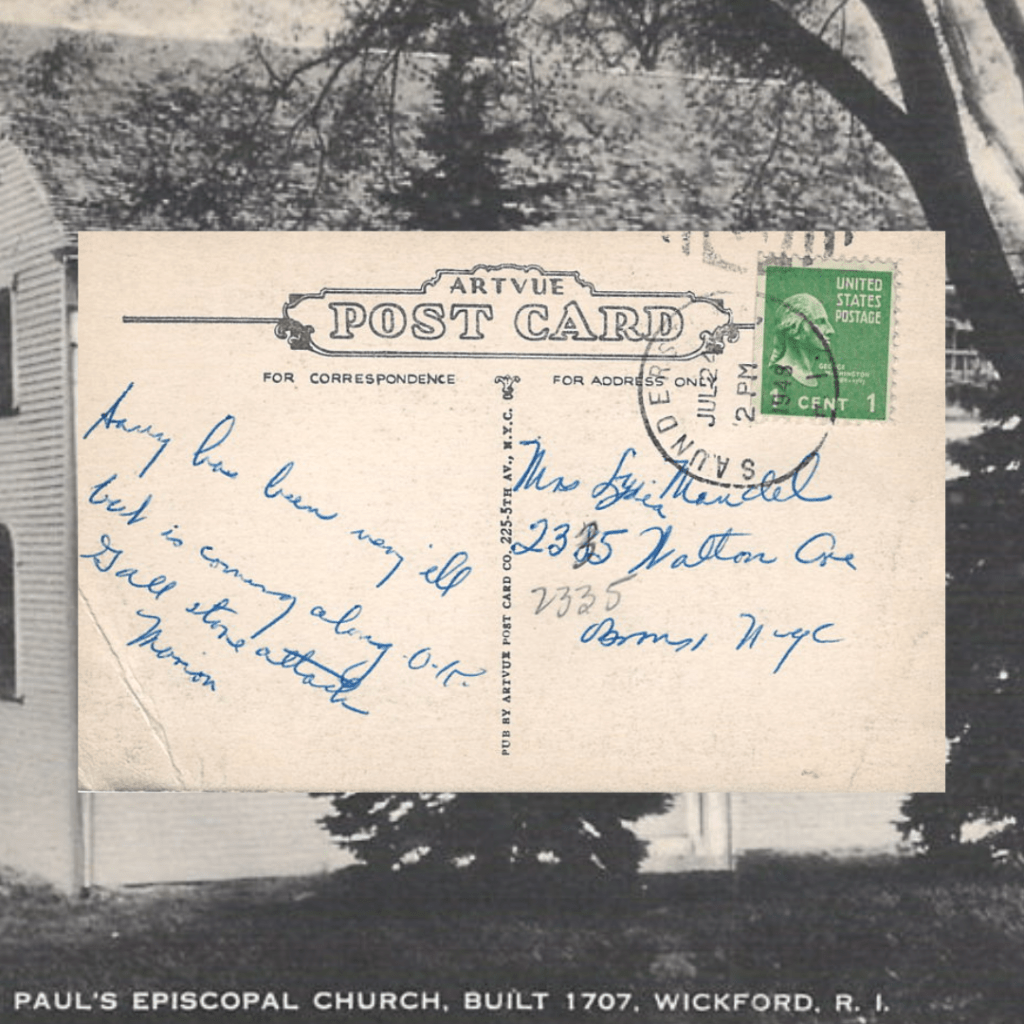
To: Mrs. Lydia Mandel. From: Marion 1948

Sammy, has been very ill but is coming along O.K. Gall stone attack.

Marion

*Alternatively, it could say “Sorry have been very ill”, however the following “but is coming along O.K.” changes tense and thus feels incongruous. Therefore, my best guess is that the first word is a name (Sammy, or perhaps Avery).

This may be one of the “later” cards I’ve blogged about, though it’s certainly not the oldest in my collection. However, it was serendipity that I chose this card today.

On July 29, 1948, the Summer Olympics opened in London. This was the first Summer Olympics held since the 1936 games held in Berlin. The fact that the games were held, and in London of all places, indicates that nations were beginning to heal after the devastation of World War II.

Despite the world uniting in sportsmanship, tensions between the United States and Russia were heating up. On July 22, President Truman issued a peacetime draft, and ten communist leaders were arrested under the Alien Registration Act. In fact, the second Red Scare had begun

It’s amidst these conflicting events (sportsmanship and fear mongering) that Sammy (or Avery, or Marion) had a gall attack. Now, I don’t know if you’ve ever had a gall attack, but if you haven’t — they are awful. I call them the “stabbies” because it’s like a sharp pain entering the space just above your stomach. Nothing helps but time. I’m lucky enough that I’ve only had two or three in my lifetime. I also have the benefit of modern medicine if they get too bad. In 1948, there’s not much to do but wait, and I imagine that time probably crept by at a snail’s pace for the poor patient.

I have no evidence of this, but I imagine that Sammy is a child, Marion the mother, and Lydia the grandmother…or perhaps sister to Marion. Again, there’s nothing that indicates any sort of relationship barring the existing postcard, but in my mind…it’s a multi-generational connection.

I did find a “Lydia Mandel”, who was a Russian artist. However, everything I see indicates she was active in France, so I find it difficult to believe thats our Lydia. The address on the postcard still exists — it’s a quaint apartment in the Bronx. For us, Sammy and Marion and Lydia’s story must therefore end with this card. However, the fifties hadn’t yet begun, and the sixties were a decade away. The coming decades were a time of great inner change and turmoil in the United States.

I guess it was sort of like a gall stone attack in that respect.

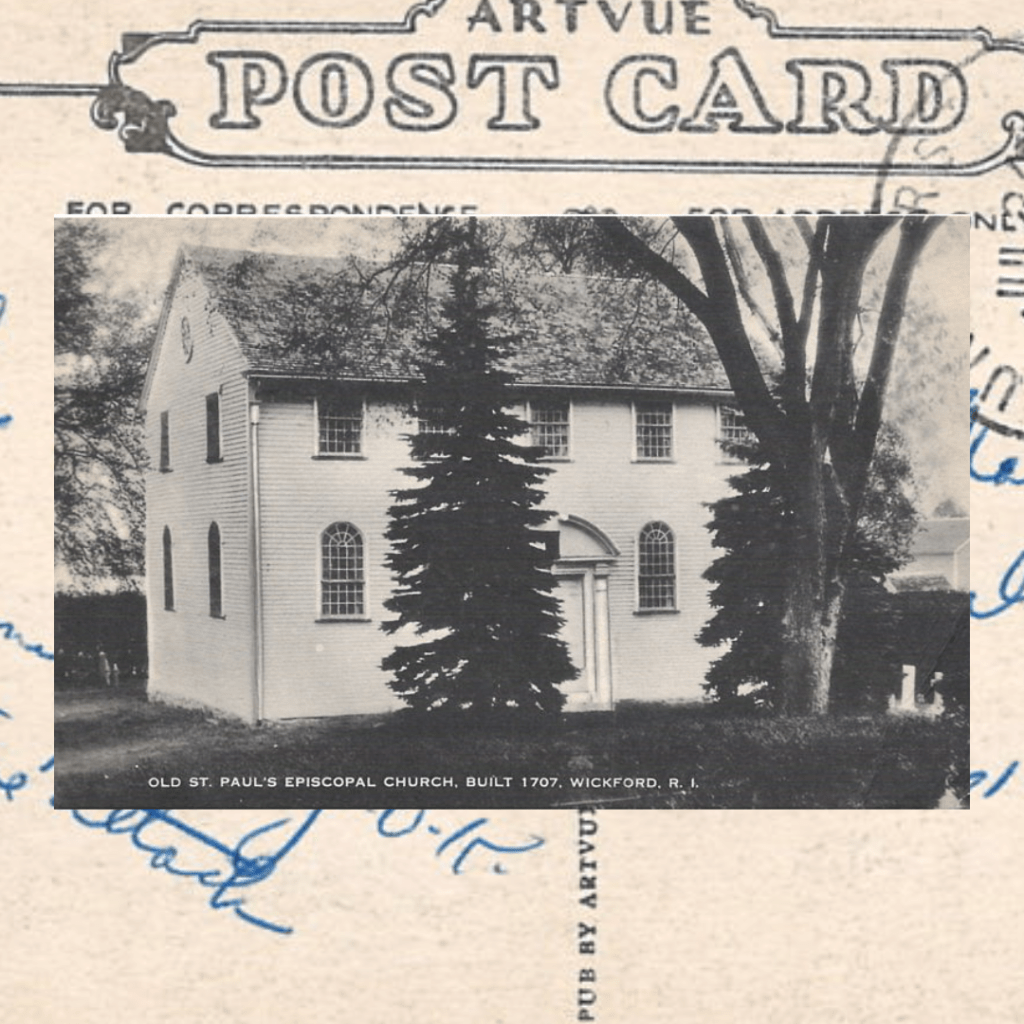
Front of Postcard: “Old St. Paul’s Episcopal Church, built 1707, Wickford R.I.

Categories
Education History Photographs Postcards Teaching Vintage Writing Prompt

Unveiling History: Square Head’s Postcard and the 1909 Garment Worker Strike

Miss Y. Kassel, 1909

This is from “square” head. Still living but have not much time to knock around.

Holly (on front of card)

November, 1909 was a momentous month in New York. As is often the case, especially in the early 1900’s, tensions amongst the working poor were brewing, and from a faction you may least expect. On November 24, 1909 — so only a few days after Square Head sent her lovely postcard to Miss Kassel — the largest strike in US history up to that point in time took place.

20,000 garment workers, many of them shirt waist factory workers (yes…THAT shirt waist factory, but more on that later), walked out. Their demands were echos of our own: better pay, better hours, safer working conditions, and unionization. History is, of course, cyclical. Because most of the striking workers were women, there was little attention paid to them at first. However, when a few wealthy women joined the cause, factory owners slowly bowed to the women’s demands. Despite resistance and interference from owners, the strike largely worked.

The Triangle Shirtwaist Factory, however, was a little different. The owners did provide better wage and better hours, but they stopped short of unionization — which meant a lack of protection for these women. This culminated in the tragic Triangle Shirtwaist Factory fire in 1911.

Now, it’s impossible to know if Square Head and/or Miss Kassel were part of the garment industries, but they would have known about the strike. If they were women who worked in any sort of industry, which I think it’s safe to say that Square Head probably did seeing as she had not much time to “knock around,” (my new favorite saying, by the way), then it would have impacted them in some way. Remember, this was a time before women could vote, so a strike that garnered better working conditions for them was an important step in the suffrage movement.

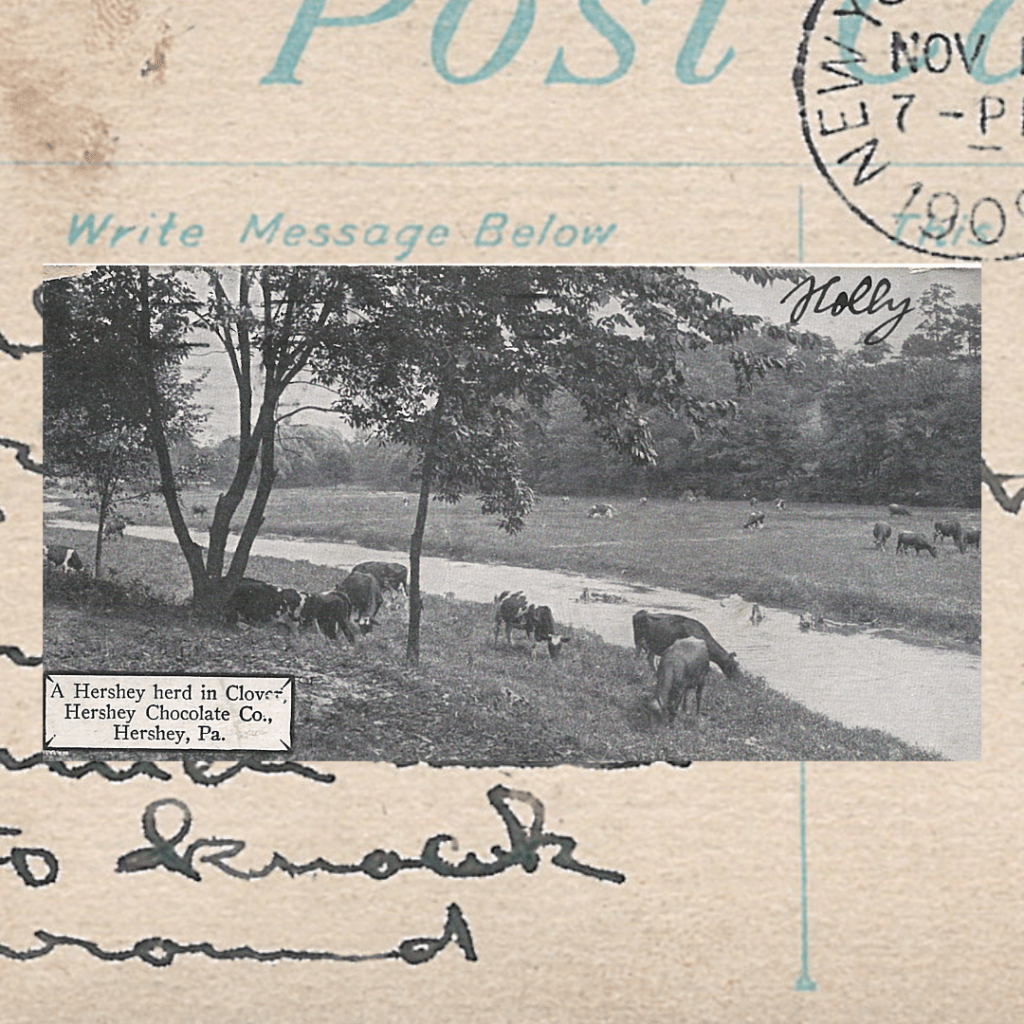
Aside from the historical context, there’s so much to love about this postcard. From the moniker “square head” to the rural photos of Hershey Cows (I like to think both ladies loved chocolate), to the hurried greeting.

However, I think one of my favorite things about this particular card, however, is how *human* it feels. The square in “square head” is drawn in such a way that the reader can see the direction her hand took. The reader can also see the mistake in “still”; the “s” covering up whatever was written before. Square Head was probably in a rush, or perhaps her mind was ahead of her hand and she began a sentence she wasn’t quite ready for. Undeterred, she clumsily corrected the mistake and continued on in her quick note to her friend. You see it again in the “c” of knock. It’s something so little, but brings the postcard — and the woman — to life in such a tangible way. I love it.

Front of postcard depicting Hershey cows. You can also see the name “Holly” on the top right corner.

Categories
History Photographs Postcards Teaching Vintage Writing Prompt

Mystery and Intrigue: A Postcard to Miss Clara Swayze from 1906

Postcard to Miss Clara Swayze, 1906

In 1906, the United States was roughly midway through its Progressive Era. We had a progressive as President; Theodore Roosevelt, trains crisscrossed the country, and the Panama Canal was in the midst of construction.

Postcards were also going through changes. Five years prior, in 1901, Postcards were no longer required to state “Private Mailing Card” and the simpler “postcard” took it’s place. However, as you can see from this postard to Miss Clara Swayze, only addresses were allowed on the back of cards. This is referred to as the “undivided back” period. And, may I say, I think it’s absolutely adorable that postcards have historical ‘eras’ like paintings, or Taylor Swift.

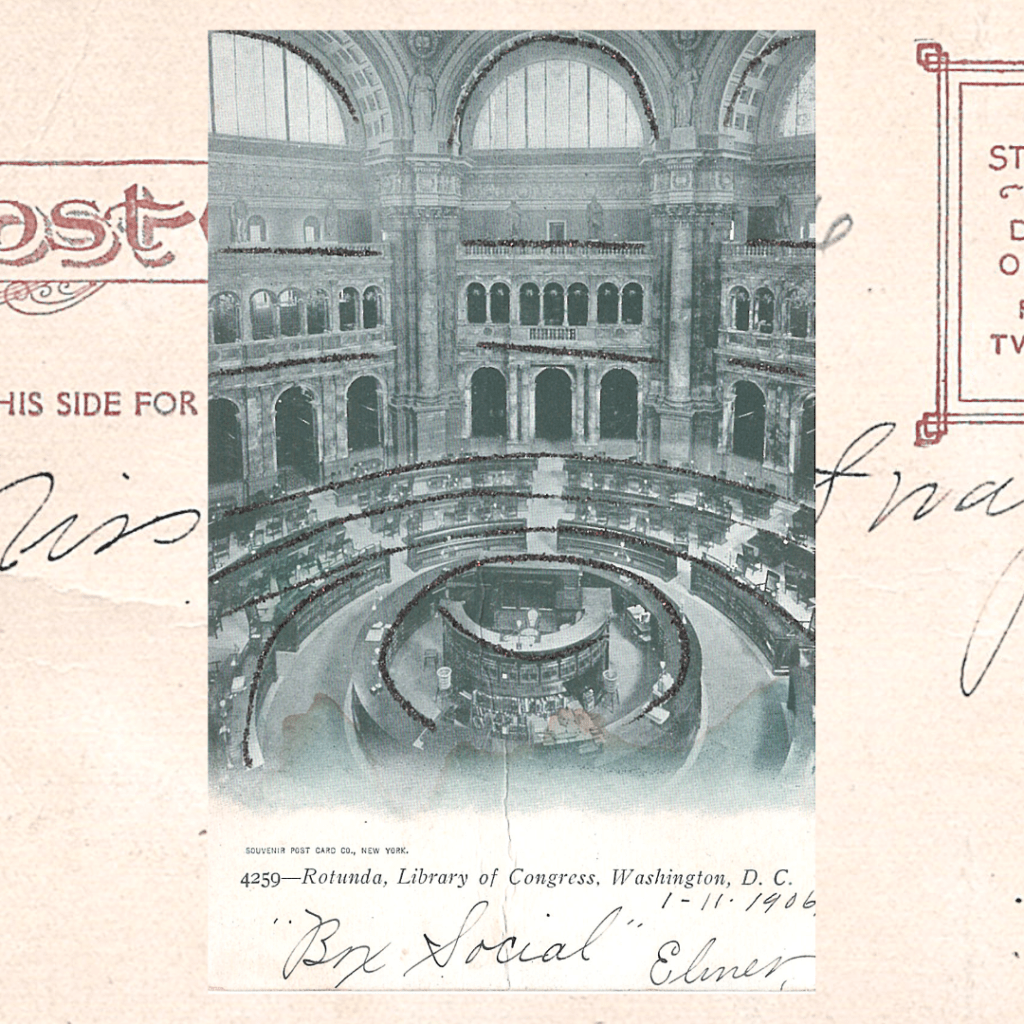
The Front of the postcard (below) says the following:

1-11-1906

Brx Social, Elmer

That’s it. There’s no stamp, and no address. So, it’s unclear if the card was kept by Clara as a memento, if it was given to a mutual friend to give to Clara, or my personal favorite, if this was a sort of exchanging of information between Clara and Elmer. Perhaps they met at the social and planned to get in touch with each other again. Maybe they went on dates, maybe they remained friends. Maybe they never saw each other again.

What is clear is that I couldn’t pin down Clara Swayze. I found a few, but I’m not confident I found her, if you catch my drift. The lack of text and information makes this card an enigma — but an enigma that allows my imagination to thrive.

Another interesting note: The card has a sort of glue glitter detailing along some of the crisp lines. I have a few like this — perhaps five total. My instinct is that this has been added after the fact, maybe by a grandchild. However, I’m certainly not positive either.I’m unsure if they came from the same sale (as I bought the postcards in a lot) or if this was a style of the time. I’d love to know if any of you have information on the mysterious glitter glue.

Front of Postcard: Rotunda, Library of Congress, Washington D.C.

Categories
family History Postcards Teaching Vintage Writing Prompt

Life of a Teacher in 1919: Hazel Truitt’s Loneliness and Connection

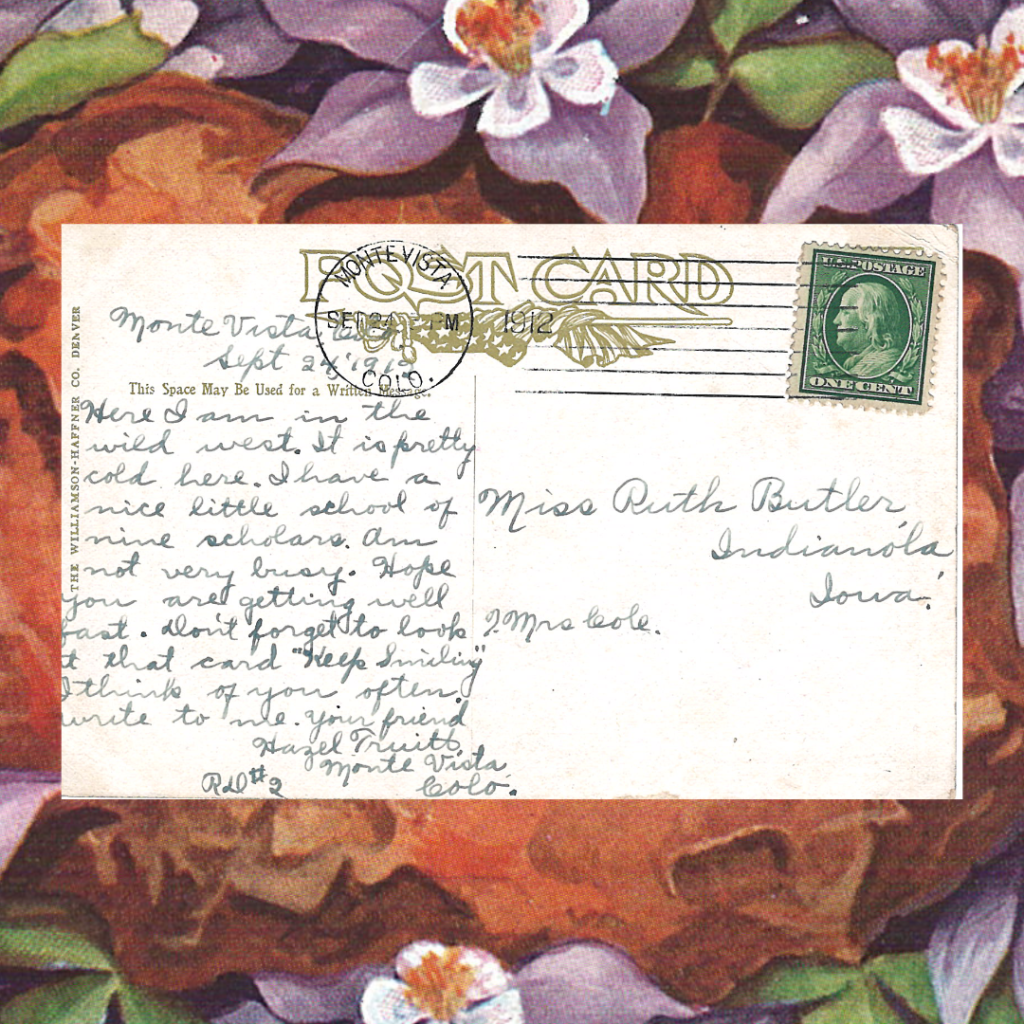
1919: To Miss Ruth Butler, From Hazel Truitt

Monte Vista, Colo.

Sept. 24, 1919

Here I am in the wild west. It is pretty cold here. I have a nice little school of nine scholars. Am not very busy. Hope you are getting well fast. Don’t forget to look at that card “keep smiling”. I think of you often. Write to me.

Your Friend

Hazel Truitt

R20#2 Monte Vista Colo.

By September of 1919 the world was no longer at war, yet the war’s effects were far reaching — especially in the United States. Soldiers returning home from WWI meant an influx of working age men streaming back into cities. This combined with the Great Migration, or the movement of Black men and women from the South towards the North for both opportunities and as a way to escape Jim Crow laws.

The confluence meant a competition of jobs that intensified and erupted into racial violence that was later dubbed the “Red Summer“. Further South, the Axeman of New Orleans had taken his second to last victim, labor strikes were erupting around the country, along with the first Red Scare, which was a great fear of far left movements. The 19th Amendment – which gave women the right to vote, was in the process of ratification, and finally the 18th Amendment, or Prohibition, was months away from taking effect.

This is the context in which Hazel Truitt wrote to her friend Ruth. Monte Vista, Colorado, was a typical western town (or as Hazel said, the Wild West. It sits in the southern part of the state, and in 1919 received it’s first library.

As a school teacher in 1919, it was likely that Hazel boarded with a family, or perhaps another teacher. She would have been paid a pittance, as part of her payment was a room (and some board). Her nine “scholars” would have ranged in age from 5 to possibly 20, and she would have instructed them in one room.

Being in a new city, and a rural one at that, was probably lonely for Hazel, and I think we can see that loneliness creep in to her writing. She makes sure to tell Ruth that she “thinks of her often” and also to “keep smiling.” Perhaps a move to the “wild west” screamed adventure and opportunity, but was a much harsher reality.

Unfortunately I was able to find nothing on Hazel or Ruth. I assume they both married, and I hope they had the chance to reunite at some point in their lifetimes.

As a teacher myself, I feel a kinship with Hazel and hope she found joy in her nine scholars.

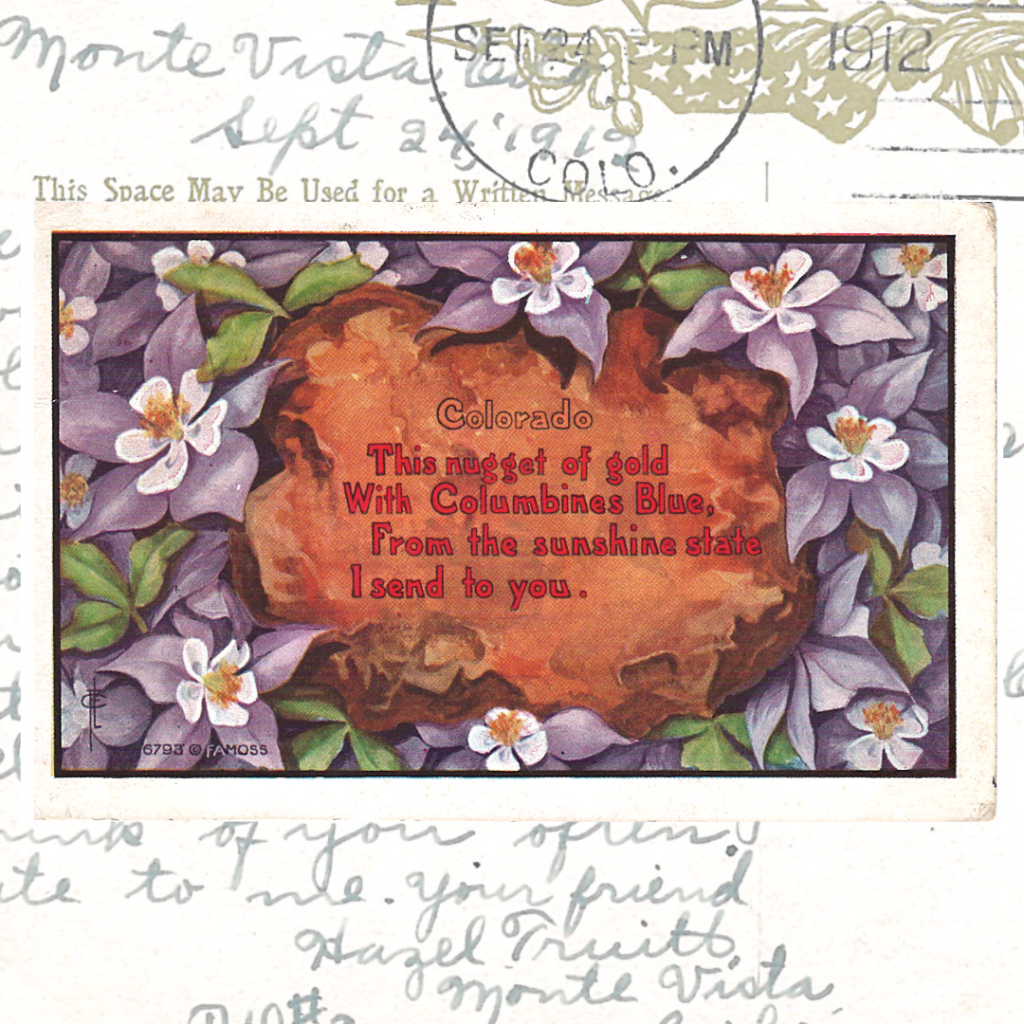
Front of postcard

Colorado

This nugget of gold

With Columbine blue

From the sunshine state

I send to you

Categories
Education History Postcards Vintage writing

Miss Ada Moll: Mama’s Spider Bite & Doctor’s Visits in the 1920’s

Mrs. J.A. Taylor: Circa early 1920’s

My Dear Beryl:

Received your (unclear) card and little note and glad to get both. Hope both of you are well and enjoying yourselves. Will be glad to hear more from you at anytime you’re not busy. We are all well except mama. She was bitten on the left eye Sunday by a poisoned spider and it was swelled up so tight she couldn’t see. Much better now. Have had Dr. Field 4 times. Can open eye a little now. Sorry you forgot the minte. Lots of love,

Ada C. Moll

Post Script: Do you remember ever seeing the view on the other side? Come over and we will take a ride. A.C.M

The date on this card is unclear, the ink lost to the ravages of time. However, I was able to find a Miss Ada C. Moll mentioned in an Indianapolis newspaper in 1925. I suspect this card pre-dates the mention, however since phone lines and wires were becoming more widespread by the 1920’s, I’d wager a guess that it’s within that time frame.

The 1920’s conjures up images of flappers, lipstick, dancing, cars, movies, progress, and fun. This card certainly has some of those aspects. In the 21st century, a postcard that exhibits nothing but a dirt road and telephone wires seems…bland. However, it’s no different than a postcard that features an image of modern wind turbines, or even a plane. That indicates progress. The postscript on the bottom of the card indicates fun and leisure. The Great War has ended, and the depression hasn’t hit yet, so times aren’t quite as rough as they’ve been.

Yet, in the midst of a changing century, we have a world in which doctors make house calls. It’s difficult to imagine the cost of a modern day doctor coming to your house not once, or twice, but FOUR times. However, apparently that’s what the case was. I suspect mama may have been in danger (or fearful) of losing her sight, hence why the doctor had been out so much. I know that if home visits for a doctor were within my price range, I’d probably do the same if my eye was swollen shut.

I’m sure that Ada was a sister of Beryl, or perhaps even writing to her sister and her niece. That being said, Beryl may have been an older sister in the employ or care of Mrs. J.A. Taylor — I’ve been able to find very little. As I’ve said often times before, women are often obscured in history since they married and took on their husbands name. For me, an amateur genealogist with limited time on my hands, it’s difficult to track down the real people. But I invite your suggestions, or even thoughts on Miss Ada C. Moll and her dear friend Beryl.

Front of Postcard, Evansville, Ind.

Categories
Education History Photographs Postcards Vintage

Pauline Howard’s 1936 Postcard to Miss Lois Wright: A Snapshot of Life Amid the Great Depression

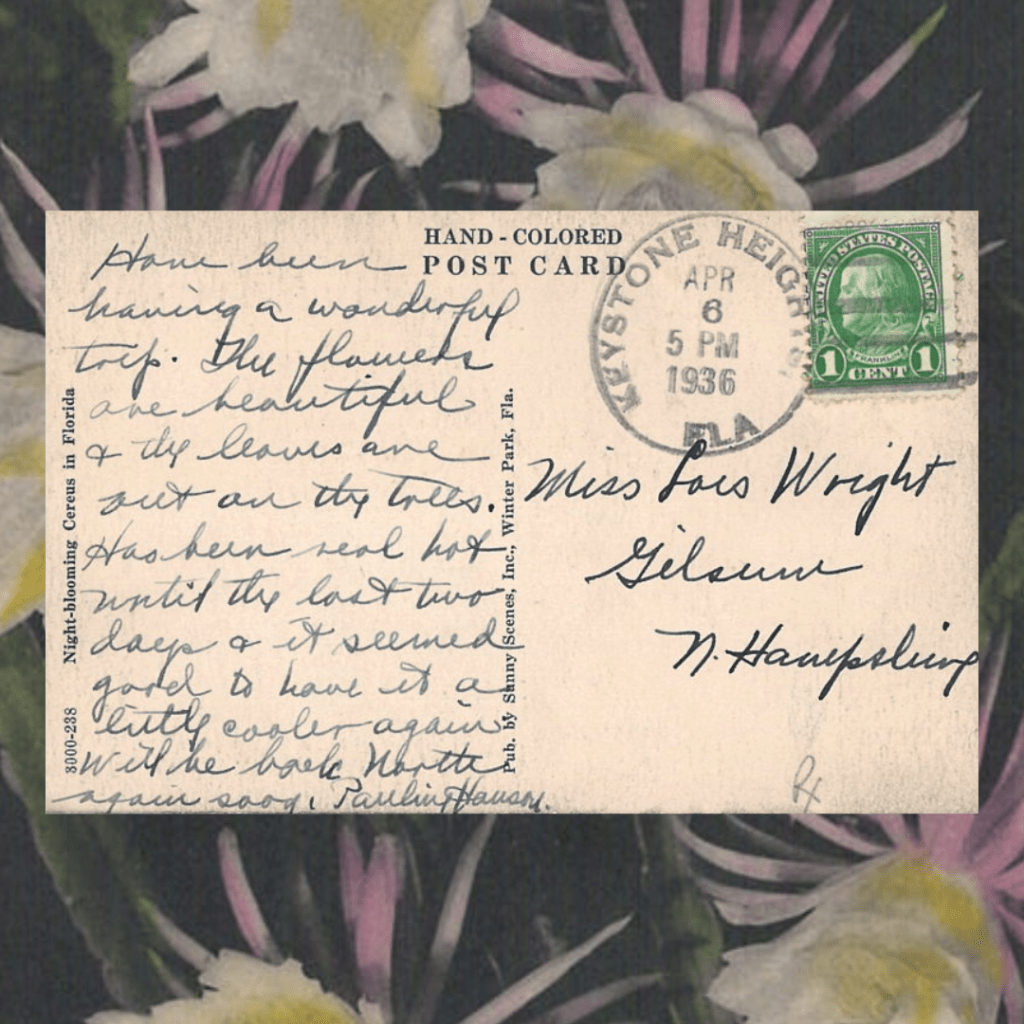
Postcard to Miss Lois Wright, 1936

Have been having a wonderful trip. The flowers are beautiufl and the leaves are out on the trees. Has been real hot until the last two days and it seemed good to have it a little cooler again. Will be back North again soon.

— Pauline Howard

First, the context. In 1936 the country was deep into the Great Depression, though the worst hard times were getting slightly better. Black Sunday, the worst storm from the American Dust Bowl, had happened a year prior, on April 14, 1935. By 1936 FDR was elected for a second term, created the Works Progress Administration (WPA) and brought unemployment to 16.9%, down from 20% of the year before. Dorothea Lange also shot her iconic image of “Migrant Mother” in March. So, even if you don’t know a lot about the 30’s, these things probably sound familiar as they exist in the American zeitgeist.

Because the Great Depression exists in our mind as a sort of dark age of American society, it’s difficult to imagine people living their lives outside of hardship. Our minds immediately go to migrants, joblessness, and perhaps even the Grapes of Wrath or Of Mice and Men.

Yes, people were desperate, and yes, these were difficult times. However, the postcard from Pauline to Lois shows that, once again, people were resilient and living the best they knew how. Now, I don’t know how old Pauline and Lois were (though from the moniker “miss” for Lois, I can assume early 20’s), but what’s clear is that despite the country’s turmoil, there was some fun to be had.

Keystone Heights seems as though it was a semi-popular wintering spot which also received assistance from FDR’s alphabet program the Civilian Conservation Corps. April was, perhaps, a tenuous time to visit, as Florida heat in April can get oppressive (indicated in the message of the postcard). But, the country was in for a worse heat wave beginning in June, so hopefully Pauline managed to make her way North before then.

I wonder what the connection between the two women were. Perhaps school friends or room mates? Women are difficult to research since I’m behind a variety of paywalls, and unfortunately I’m not confident I was able to find the correct people. However, there was a Lois Wright who lived in New Hampshire and, despite marriage, did not change her last name (it seems). She lived to be 104, and fits the timeline. Though, of course I can’t guarantee this is our Lois, I’d like to believe it could be.

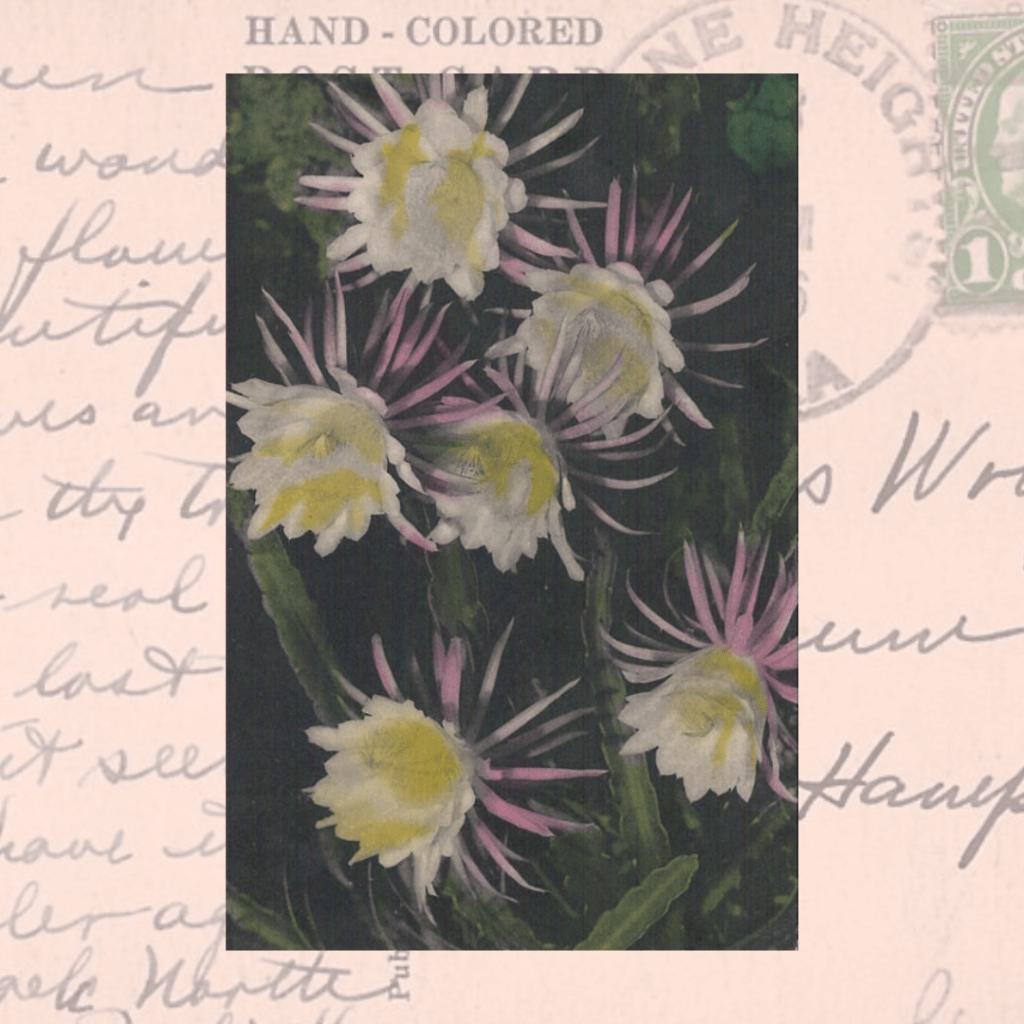
The postcard is also beautifully hand colored, and is stunning in person.

Night Blooming Cereus: Front of Postcard