Have you ever woken up and really wished that there were a way you could learn about the American Revolution that spoke to you? Never fear, The American Revolution as told by GIFS is here!
Let’s start at the beginning. Britain, France, and the 13 Colonies end the 7 Year War in 1763 after—you guessed it— 7 years. A lot happened in this war, but the TL;DR version is that it cost Britain a shit ton of money, and resulted in the Proclamation Line of 1763 which didn’t allow colonists to go steal more Indigenous lands. But…if you’ve ever met a colonist…
After the war, which also took place in Europe by the way, stop buying into American Exceptionalism…
Britain was basically broke and since they went into debt partially by fighting the French for the American Colonists, Parliament turned to the 13 Colonies for help.
As you can imagine, the 13 colonies didn’t love that too much.
Let’s talk for a minute about the different taxes that Britain tried to impose. Actually, jk, it doesn’t matter because the colonists whined so much about the taxes that Britain repealed all of the laws.
…except one.
I want to be really clear here. The tea tax was the final tax imposed on the colonists, and it mainly hit the merchants buying the tea from Britain (though consumer prices went up, of course, because capitalism). Also, there were more regulations so people couldn’t bootleg tea anymore. Britain thought they were awesome. They’d finally made a tax that was going to stick, no one could possibly be angry!
I mean, I don’t want to belabor the point but…have you ever met a colonist?
This group of kids called the Sons of Liberty, which, by the way, would be described as Anti-Fa now, decided they were really going to stick it to the British and their tea tax.
And thus, we have the Boston Tea Party. I’ve included a dramatic recreation for you below.
The tea party, as fun as it sounds, actually cost the Brits a whole lot of money. Millions of dollars worth of tea was destroyed. My favorite part is that the Sons of Liberty trolled around the harbor for the next day or so, making sure no one came to steal any of the floating tea.
The Brits, of course, were super pissed.
The Boston Tea Party led directly to the Intolerable Acts…but you’ll have to tune in to part two for that.
If you’re a woman, perhaps you’ve been told you’re a gossip. Or, you’ve been warned against gossip. Perhaps you’ve even been forced to watch Tedx clips about why you shouldn’t gossip at work, given to you by some dude on the internet.
The term “gossip” tends to be a phrase that uniquely targets women, and the way in which women interact with one another. It carries a negative connotation, and people often consider gossiping as “bad.” In Puritan New England, gossip was called “gadding about”, even Martha Ballard, that great New England midwife, called herself a gadder. Probably because she had all the juicy details of everyone’s lives (and could testify in court if a woman named the father of an illegitimate child on her birthing bed).
Now, we call gossip “spilling the tea” or “hot gos” or, simply, “chatting.” Whatever you call it, it’s usually targeted at female groups, and, occasionally, used as a weapon within workplaces.
The Weaponization of Gossip
Some workplaces, usually female centered (though not always), attempt to “ban” gossip. It’s actually something I’ve heard a lot from fellow teachers discussing their workplace conditions. The problem with this is that gossip is a hugely broad term, and may be defined as anything “negative.”
By defining any negative speak as “gossip” and therefore banned within the workplace, it prevents women (or anyone), from discussing workplace problems or issues. In a world where male administrators may not listen to the concerns of their female colleagues, this is problematic. Additionally, a “ban” on gossip may create a culture of fear — where you may be worried to tell someone about a problem for fear of “being negative” and getting reported. It’s like, McCarthyism, but at work!
The fear of being perceived as “negative” prevents people from perhaps discussing important topics like, oh I don’t know, wages, harassment, internal policies, or other things that employees may want to take collective action on. A ban on gossip harms everyone, but can be especially harmful for any BIPOC employees. Bias is real.
And, there’s the rub. It’s that collective action part that administrators or bosses want to prevent.
Ok…so what?
So, what can you do? Well, obviously, the answer is to gossip about it. Because often what employers deem as gossip…is not actually gossip.
At its core, gossip is information. Information about time, work, pay, conditions, experiences. Information is powerful and information is almost always used as an avenue of change. On the flip side any attempt to control or hide information is almost always used to stagnate and maintain power.
So talk my friend. Spill the beans, the tea, gad about, chat, discuss, laugh, get angry, get sad, get happy and importantly — share information. Stay powerful.
When last we saw each other, I had just told you the story of the Pequot Massacre. Taking place in the 1630’s, the Massacre occurred a little over a decade after the first Thanksgiving, and was responsible for the death of hundreds of Pequot men, women, and children, and the enslavement of hundreds more.
Fast forward to the winter of 1675, Plymouth, Massachusetts. The body of John Sassamon is found, killed and frozen. John Sassamon is A Wampanoag Christian, and educated at Harvard. He therefore represents a bridge. He’s a man straddling two cultures in the borderland of colonial America. And now, he’s dead.
Metacom, aka King Phillip, and his men are implicated in the death. This is where the whole Thanksgiving tie-in is made. You see, Massasoit, Metacom’s father, was part of the first Thanksgiving, and made an “alliance of mutual defense” in 1621 with Governor John Carver, leader of the newly established Plymouth Colony.
Now, however, Massasoit is long dead and Metacom is faced with increasingly imbalanced interactions with the colonists. Metacom, like his father, had entered into various peace agreements with the Brits, but he saw these treaties as mutual while the colonists saw the agreements as Indigenous submission. After the death of John Sassamon, the colonists arrest, try, and kill three of Metacom’s men in British court. I want to be clear, this was British justice, not Indigenous justice and it’s a final straw for Metacom. So, he strikes back, killing nine people in the town of Swansea.
And this is the spark that becomes King Phillips war.
Unlike the Pequot Massacre, this was an all out war between various Indigenous groups and the colonists. This war has far reaching ramifications for both the Indigenous nations in New England, and the colonists. The fighting lasted about fourteen months, and by the end of it most of the Indigenous nations in the area had been pulled into the conflict. The colonists often demanded that Indigenous nations trying to stay neutral prove their neutrality by giving up their weapons, and when they refused, they’d be attacked (see the Great Swamp Massacre). Some Indigenous nations, looking to secure their land and trading rights, sided with the British. In the end, Metacom and his followers were routed and Metacom was killed. At least 3000 Indigenous men, women, and children died, along with roughly 900 colonists. The British colonists sold thousands more Indigenous peoples into slavery. According to the American YAWP Indigenous nations “comprised roughly 25 percent of New England’s population; a decade later, they made up perhaps 10 percent.” The war was brutal, and with the death and enslavement of so many Indigenous peoples, it also secured the Puritans’ foothold in the Americas.
Ok…So What?
Most people don’t know the story of King Phillip’s War. They don’t really even know who was at the first Thanksgiving — preferring instead to stay safe and comfortable in the warmth that a lack of knowledge brings–however, history doesn’t happen in a vacuum, and the aftermath of Thanksgiving is as important as the day itself.
Metacom, or King Phillip, was part of the legacy of that first Dinner of Thanks. His people were forever changed by the landing of Pilgrims in Plymouth, and our American history has been informed by the romanticization that Pilgrims/Puritans and Indigenous nations “got along” and “helped each other” out.
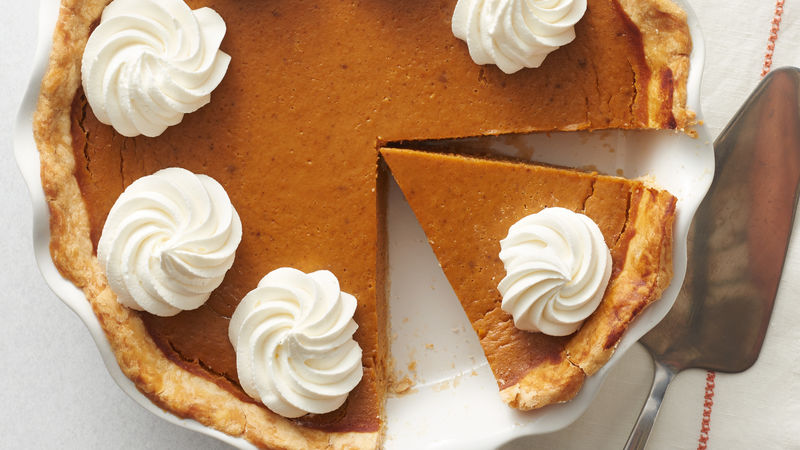
When in reality, that first Thanksgiving ushered in hundreds of years of violence, slavery, and displacement. What we call nostalgia, Indigenous Americans call a day of mourning. This is the 400th anniversary of that particular feast (which actually took place in late summer so like..that anniversary has technically past). As we sit down to our squash pies, and cranberry sauce — indigenous foods, by the way– we should be very aware of the legacy of destruction that comes with Thanksgiving. Moving forward, we must not only be cognizant of the history, but willing to take steps to right the wrongs of our past.
Because, you see, you can’t be proud of your ancestors while trying to distance yourself from their wrongdoings. You can’t literally have your pie, and eat it too.
There weren’t pumpkin pies either. The Pilgrims didn’t have an oven.
On Thursday, millions of people in the United States will sit down with family members they barely like and eat an awkward meal together. Perhaps you’ll have to endure the ramblings of your sister’s boyfriend Deuce (Thaddeus) as he says “at the first Thanksgiving everyone got along, what’s wrong with America now days are our own divisions.”
If you’re anything like me, your family has already heard how the Thanksgiving Story was romanticized by a magazine editor to be barely true, or you’ve discussed how FDR changed the date of holiday to extend the Christmas shopping season. In short – your family has probably already told you to “keep your liberal views” to yourself at the table, while everyone else spouts off incorrect information about the holiday and what America lacks now-days.
Well. If this is you – I have you covered. Welcome to Part One of the Thanksgiving Legacy you never knew about. The Pequot Massacre.
Pilgrims Vs. Puritans
First, I want to note. The people involved in the Pequot Massacre were largely Puritans. The Puritans are NOT the Pilgrims. Seriously, they aren’t. The Puritans wanted to leave England and create a “city upon a hill”, which is to say they wanted to create a cool kids club that everyone in Britain would look at and want to be like. The Pilgrims – the ones who celebrated the “first” Thanksgiving – arrived on the Mayflower and landed on what they called Plymouth. They were religious separatists who wanted nothing to do with Britain. Pilgrims were poor, and had very small numbers. Puritans were middle class, and came in droves.
Also, neither group landed here first. In fact – the Pilgrims arrived in New England in 1621 – Jamestown was founded in 1607, cannibalism occurred in Jamestown in 1609-1610, and the first enslaved Africans arrived in Virginia in 1619. So no. Pilgrims and religion did not “found” America. Profit, labor, and exploitation “founded” America.
The Massacre
Let me set the scene. It’s 1637. Settlers in New England have “claimed” land that was occupied by Native Americans, the Pequots. Obviously, these settlers have no real authority over this land, but this is what we call a “borderland”. Which is to say, it’s an area where two or three very different groups come in conflict with one another. And by conflict, I mean fighting. Borderlands are generally violent spaces, drought with tension and misunderstandings. That’s exactly what had happened between the New England colonists and the Pequots. As the colonists encroached on Native land and trade, the Pequots fought back. Sporadic fighting occurred on both sides, leaving a handful of dead in its wake.
In May of 1637, a group of armed colonists marched into the Native American territory, calling themselves the “sword of the Lord.” The group was made up of men from various New England colonies, including Massachusetts Bay, Plymouth, and Connecticut. The men surrounded the Pequot village, and the massacre began. The colonists lit the houses on fire and killed anyone trying to escape, shooting them or cutting them down with swords. Men, women, and children were killed. Upwards of 700. Families attempted to escape their burning houses and were callously slaughtered, not by the dozens, but by the hundreds. This was not a fight, not a war, this was a massacre. Not only that, it was a premeditated massacre.
Ok…So What?
Over the course of the next two months, the colonists and their allies, decimated the Pequots in a series of other attacks. By the end of the summer of 1637, most of the Pequot nation was dead. Those who survived, the Puritans sold into slavery – yes, the New England colonists engaged in the slave trade, they were enslavers and sellers of Native Americans and Africans.
So, sixteen years after the first “Thanksgiving”, the New England colonies and the Native Americans were killing each other over land and trade disputes, and the colonists were fighting dirty, ambushing and killing without remorse. In killing Pequots, colonists could gain land, maximize profit by selling people into enslavement, and take resources and trade routes for their own.
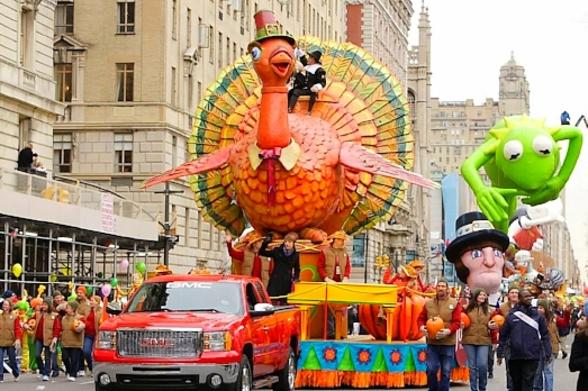
This was only a first step. The 1670’s brought King Phillips War. Join me on Thursday for Part II of “The Thanksgiving Legacies Parades Never Taught You”

 Hipstory