Categories
Current Events Education Haiku History Poetry

Learning is Radical

“The classroom remains the most radical space of possibility” — bell hooks

The classroom spaces

Are under attack right now

To try to stop change

Education is

A powerful thing for kids

And adults alike

A lack of knowledge

Means keeping the status quo

While education

Means moving forward

We can not afford to stop

We must keep teaching.

Categories
Current Events Education History

The Weaponization of Gossip

In the workplace, it’s really about control.

If you’re a woman, perhaps you’ve been told you’re a gossip. Or, you’ve been warned against gossip. Perhaps you’ve even been forced to watch Tedx clips about why you shouldn’t gossip at work, given to you by some dude on the internet.

The term “gossip” tends to be a phrase that uniquely targets women, and the way in which women interact with one another. It carries a negative connotation, and people often consider gossiping as “bad.” In Puritan New England, gossip was called “gadding about”, even Martha Ballard, that great New England midwife, called herself a gadder. Probably because she had all the juicy details of everyone’s lives (and could testify in court if a woman named the father of an illegitimate child on her birthing bed).

Now, we call gossip “spilling the tea” or “hot gos” or, simply, “chatting.” Whatever you call it, it’s usually targeted at female groups, and, occasionally, used as a weapon within workplaces.

The Weaponization of Gossip

Some workplaces, usually female centered (though not always), attempt to “ban” gossip. It’s actually something I’ve heard a lot from fellow teachers discussing their workplace conditions. The problem with this is that gossip is a hugely broad term, and may be defined as anything “negative.”

By defining any negative speak as “gossip” and therefore banned within the workplace, it prevents women (or anyone), from discussing workplace problems or issues. In a world where male administrators may not listen to the concerns of their female colleagues, this is problematic. Additionally, a “ban” on gossip may create a culture of fear — where you may be worried to tell someone about a problem for fear of “being negative” and getting reported. It’s like, McCarthyism, but at work!

The fear of being perceived as “negative” prevents people from perhaps discussing important topics like, oh I don’t know, wages, harassment, internal policies, or other things that employees may want to take collective action on. A ban on gossip harms everyone, but can be especially harmful for any BIPOC employees. Bias is real.

And, there’s the rub. It’s that collective action part that administrators or bosses want to prevent.

Ok…so what?

So, what can you do? Well, obviously, the answer is to gossip about it. Because often what employers deem as gossip…is not actually gossip.

At its core, gossip is information. Information about time, work, pay, conditions, experiences. Information is powerful and information is almost always used as an avenue of change. On the flip side any attempt to control or hide information is almost always used to stagnate and maintain power.

So talk my friend. Spill the beans, the tea, gad about, chat, discuss, laugh, get angry, get sad, get happy and importantly — share information. Stay powerful.

Categories
Climate Current Events Poetry

Snow

A free write on weather

The energy on the road is static

Cars, dusted with powder, crawl along. Their drivers shivering from the stress.

They drive slow, outside of lanes they can no longer see. Erratic in the storm.

As humans we’ve bent nature to our will. Covered mountains with tar and pitch, extracted salt to return back to the curated roads that our cars crawl on like ants.

But nature fights back.

Ice lays underneath the beauty of new snow, stickier than tar, slicker than glass.

Invisible. Silent. Lurking.

Laying in wait because nature knows we have to be to work.

Humans are, after all, predictable. We have to go to work to keep our jobs to buy the gas that drives our cars that pays the taxes to fix the holes in the road after every winter.

We can’t shirk responsibility because there aren’t enough plows.

There aren’t by the way.

So all we can do on this icy road is marvel at the beauty of nature and drive slow because we fear her. We take a deep breath when our car begins to sway.

Categories
Education Poetry

Sick

A free-write on teaching and planning.

It started with a sneeze. And then my ears began to pop. I have inner ear issues anyway, so I thought it was the weather changing (I can predict snow based on how loud my tinnitus is — it’s totally true). I woke up and went to work.

I feel, at this point, obligation to say it’s not Covid. It’s just a cold. Because that’s what we all must say if we are sick from now until eternity. It’s not covid. It’s a cold.

At work, the fatigue set in. Still. I didn’t see the signs. I thought it was the 160 students I teach, or the coming break, or the angst and frustration I feel at administration. Besides, it was a Monday. Surely there are a million reasons I’m tired and annoyed. I wear a mask, I haven’t really been around anyone. Surely I’m just tired.

Then, the scratchy throat, the low voice, the coughs.

At this point I now feel obligated to say that I wear a mask all day everyday, even though I’ve had three covid shots. Even though my state doesn’t mandate it. I do it so I don’t spread germs.

Good thing I do. Because I’m sick.

In — almost — any other job, if you’re sick, you call in and that’s it. Other people may have to work a little harder, or take on some of your normal responsibilities, but you either go home, or you call in. You wash your hands and then go to sleep.

Not if you’re a teacher.

Once I determined that I was degressing, and not progressing, I decided to “call in” for the next day. But this is where the planning started.

Because, you see, someone can’t step in and just “work for me”. I have to leave them with a plan. I have to leave them with a plan they can carry out. I have to leave them with copies and a paper with instructions for each class and seating charts and procedures.

I have to leave them with a schedule, with a list of the kids to watch for. I have to plan it down to the minute so they know *exactly* what to do with each class.

Now, they could just “show the slides” I guess — but lets be real. I’m the one with information in my brain, and I can’t guarantee a sub will have that. So the plan ALSO has to be relevant but something that anyone who knows nothing about history can handle.

So. In essence, it’s off plan for me.

ok…so what?

Well. Number 1, I’m mad that I’m getting colds again. I miss how everyone used to wear masks and wash their hands. You know, the early days of the pandemic when people were still kind.

Number 2: It’s more work to plan to be sick, than to come in with a sickness. And therein lay the problem. I don’t have a strong solution. Sure – I could have thrown together some shit that the kids could have just done, but then I would have been ‘in trouble’ for not leaving a good enough plan.

I think this is what people don’t quite understand about teaching. I won’t lie, summers off is actually quite glamourous. But in return, it means that I’m around 160 teenagers with God knows what on their hands. Teachers do, and will, get sick. When that happens, we don’t get to just “call in”.

It’s planning and preparation, and it’s more than most professionals have to do.

So please, send your kid to school in a mask. It’s the responsible thing to do, because we are still in the middle of a pandemic.

/endrant
Categories
Current Events Haiku Poetry

The right to choose?

Haiku Review Saturday

Expensive Healthcare

Equals expensive birthing

AND body damage

Birth control access

Is easier than it was

Barriers exist

Doctors prescribe it

What if you have no doctor?

Or no insurance?

Well, there are options

Example: planned parenthood

But…there’s defunding

Rollback of Roe/wade

A dangerous precedent

All about control…

Categories
Current Events Poetry

Two Years

A free write on family

Laughter crashes around me as I stand in the corner of the room.

My family gathers around the dimly lit table. It’s only 5pm, but darkness comes early this time of year, skewing time and making it seem unnaturally late. Everyone is claiming their spot, laughing and speaking over each other, vying to be heard.

Smiles are not just in the eyes. They’re on faces. Faces that I can see fully. Smiles I haven’t seen in person for years.

I should be in the middle of it. I love family, and I love gatherings. Still, I detach myself and stand in the corner. I seek out the spaces close to windows, I’m Hyper-aware of any coughs or sniffles.

“You’ve had three shots. Three.” I tell myself, smiling at everyone while I wait my turn to slosh turkey and mashed potatoes on my plate. Unbidden, I wonder if this meal is worth getting sick over.

“Everyone here is vaccinated” I think, sitting down to my first extended family meal in two years. “Some of them have already had boosters.”

I eat quickly and move to the outskirts again. Away from the screams and laughter. Away from the games. I find a spot with one or two people who, like me, can’t seem to join the crowds.

Overall, it’s a pleasant evening. It seems like no one has changed.

Except me.

Of course that’s incorrect. Of course we’ve all changed. Of course we’ve all experienced the pandemic in similar, yet completely separate ways.

Isolated. Grieving and frightened, but alone.

And now that we’re together, how do we come back from that feeling? How do I move forward?

Each new variant is frightening. Each gathering feels like a risk. Even with vaccinations.

And I wonder if I’ll be standing in corners for the rest of my life

Categories
Current Events History

Thanksgiving Legacies Parades Never Taught You: The Sequel

King Phillip’s War

When last we saw each other, I had just told you the story of the Pequot Massacre. Taking place in the 1630’s, the Massacre occurred a little over a decade after the first Thanksgiving, and was responsible for the death of hundreds of Pequot men, women, and children, and the enslavement of hundreds more.

Fast forward to the winter of 1675, Plymouth, Massachusetts. The body of John Sassamon is found, killed and frozen. John Sassamon is A Wampanoag Christian, and educated at Harvard. He therefore represents a bridge. He’s a man straddling two cultures in the borderland of colonial America. And now, he’s dead.

Metacom, aka King Phillip, and his men are implicated in the death. This is where the whole Thanksgiving tie-in is made. You see, Massasoit, Metacom’s father, was part of the first Thanksgiving, and made an “alliance of mutual defense” in 1621 with Governor John Carver, leader of the newly established Plymouth Colony.

Now, however, Massasoit is long dead and Metacom is faced with increasingly imbalanced interactions with the colonists. Metacom, like his father, had entered into various peace agreements with the Brits, but he saw these treaties as mutual while the colonists saw the agreements as Indigenous submission. After the death of John Sassamon, the colonists arrest, try, and kill three of Metacom’s men in British court. I want to be clear, this was British justice, not Indigenous justice and it’s a final straw for Metacom. So, he strikes back, killing nine people in the town of Swansea.

And this is the spark that becomes King Phillips war.

Unlike the Pequot Massacre, this was an all out war between various Indigenous groups and the colonists. This war has far reaching ramifications for both the Indigenous nations in New England, and the colonists. The fighting lasted about fourteen months, and by the end of it most of the Indigenous nations in the area had been pulled into the conflict. The colonists often demanded that Indigenous nations trying to stay neutral prove their neutrality by giving up their weapons, and when they refused, they’d be attacked (see the Great Swamp Massacre). Some Indigenous nations, looking to secure their land and trading rights, sided with the British. In the end, Metacom and his followers were routed and Metacom was killed. At least 3000 Indigenous men, women, and children died, along with roughly 900 colonists. The British colonists sold thousands more Indigenous peoples into slavery. According to the American YAWP Indigenous nations “comprised roughly 25 percent of New England’s population; a decade later, they made up perhaps 10 percent.” The war was brutal, and with the death and enslavement of so many Indigenous peoples, it also secured the Puritans’ foothold in the Americas.

Ok…So What?

Most people don’t know the story of King Phillip’s War. They don’t really even know who was at the first Thanksgiving — preferring instead to stay safe and comfortable in the warmth that a lack of knowledge brings–however, history doesn’t happen in a vacuum, and the aftermath of Thanksgiving is as important as the day itself.

Metacom, or King Phillip, was part of the legacy of that first Dinner of Thanks. His people were forever changed by the landing of Pilgrims in Plymouth, and our American history has been informed by the romanticization that Pilgrims/Puritans and Indigenous nations “got along” and “helped each other” out.

When in reality, that first Thanksgiving ushered in hundreds of years of violence, slavery, and displacement. What we call nostalgia, Indigenous Americans call a day of mourning. This is the 400th anniversary of that particular feast (which actually took place in late summer so like..that anniversary has technically past). As we sit down to our squash pies, and cranberry sauce — indigenous foods, by the way– we should be very aware of the legacy of destruction that comes with Thanksgiving. Moving forward, we must not only be cognizant of the history, but willing to take steps to right the wrongs of our past.

Because, you see, you can’t be proud of your ancestors while trying to distance yourself from their wrongdoings. You can’t literally have your pie, and eat it too.

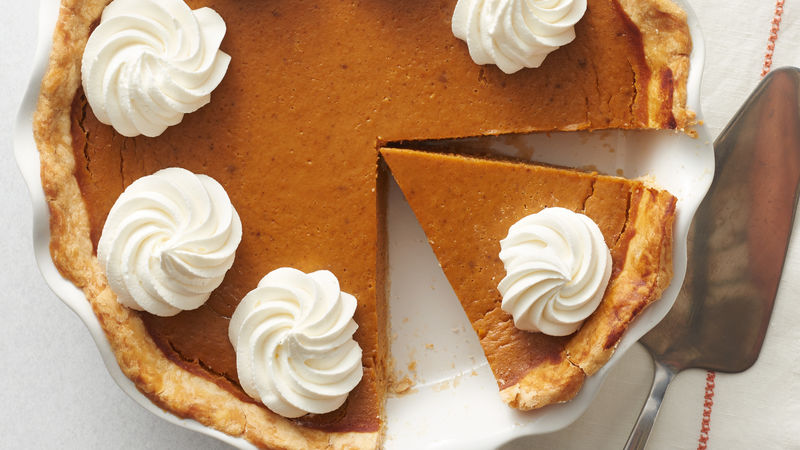
Pumpkin Pie Recipe - BettyCrocker.com
There weren’t pumpkin pies either. The Pilgrims didn’t have an oven.

Categories
Current Events Education History Poetry

The Thanksgiving Legacies Parades Never Taught You

Part One: The Pequot Massacre

On Thursday, millions of people in the United States will sit down with family members they barely like and eat an awkward meal together. Perhaps you’ll have to endure the ramblings of your sister’s boyfriend Deuce (Thaddeus) as he says “at the first Thanksgiving everyone got along, what’s wrong with America now days are our own divisions.”

If you’re anything like me, your family has already heard how the Thanksgiving Story was romanticized by a magazine editor to be barely true, or you’ve discussed how FDR changed the date of holiday to extend the Christmas shopping season. In short – your family has probably already told you to “keep your liberal views” to yourself at the table, while everyone else spouts off incorrect information about the holiday and what America lacks now-days.

Well. If this is you – I have you covered. Welcome to Part One of the Thanksgiving Legacy you never knew about. The Pequot Massacre.

Pilgrims Vs. Puritans

First, I want to note. The people involved in the Pequot Massacre were largely Puritans. The Puritans are NOT the Pilgrims. Seriously, they aren’t. The Puritans wanted to leave England and create a “city upon a hill”, which is to say they wanted to create a cool kids club that everyone in Britain would look at and want to be like. The Pilgrims – the ones who celebrated the “first” Thanksgiving – arrived on the Mayflower and landed on what they called Plymouth. They were religious separatists who wanted nothing to do with Britain. Pilgrims were poor, and had very small numbers. Puritans were middle class, and came in droves.

Also, neither group landed here first. In fact – the Pilgrims arrived in New England in 1621 – Jamestown was founded in 1607, cannibalism occurred in Jamestown in 1609-1610, and the first enslaved Africans arrived in Virginia in 1619. So no. Pilgrims and religion did not “found” America. Profit, labor, and exploitation “founded” America.

The Massacre

Let me set the scene. It’s 1637. Settlers in New England have “claimed” land that was occupied by Native Americans, the Pequots. Obviously, these settlers have no real authority over this land, but this is what we call a “borderland”. Which is to say, it’s an area where two or three very different groups come in conflict with one another. And by conflict, I mean fighting. Borderlands are generally violent spaces, drought with tension and misunderstandings. That’s exactly what had happened between the New England colonists and the Pequots. As the colonists encroached on Native land and trade, the Pequots fought back. Sporadic fighting occurred on both sides, leaving a handful of dead in its wake.

In May of 1637, a group of armed colonists marched into the Native American territory, calling themselves the “sword of the Lord.” The group was made up of men from various New England colonies, including Massachusetts Bay, Plymouth, and Connecticut. The men surrounded the Pequot village, and the massacre began. The colonists lit the houses on fire and killed anyone trying to escape, shooting them or cutting them down with swords. Men, women, and children were killed. Upwards of 700. Families attempted to escape their burning houses and were callously slaughtered, not by the dozens, but by the hundreds. This was not a fight, not a war, this was a massacre. Not only that, it was a premeditated massacre.

Ok…So What?

Over the course of the next two months, the colonists and their allies, decimated the Pequots in a series of other attacks. By the end of the summer of 1637, most of the Pequot nation was dead. Those who survived, the Puritans sold into slavery – yes, the New England colonists engaged in the slave trade, they were enslavers and sellers of Native Americans and Africans.

So, sixteen years after the first “Thanksgiving”, the New England colonies and the Native Americans were killing each other over land and trade disputes, and the colonists were fighting dirty, ambushing and killing without remorse. In killing Pequots, colonists could gain land, maximize profit by selling people into enslavement, and take resources and trade routes for their own.

This was only a first step. The 1670’s brought King Phillips War. Join me on Thursday for Part II of “The Thanksgiving Legacies Parades Never Taught You”

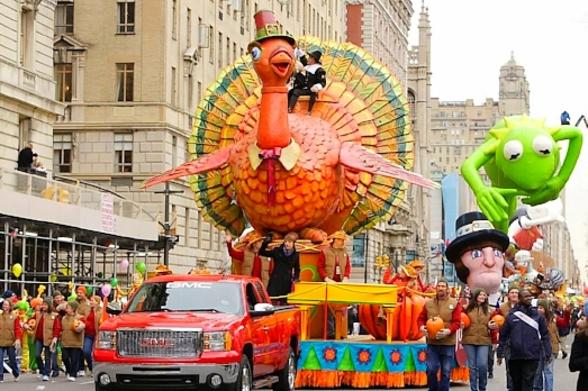
History of the Macy's Thanksgiving Day Parade
They didn’t eat Turkey at Thanksgiving either.

Categories
Current Events Education Local Government Poetry

An Absence of Knowledge

A free-write on book banning

Nobel Prize in Literature

Pulitzer Prize for Fiction

Presidential Medal of Freedom

These are only three of the many awards Toni Morrison has won. Yet schools are pulling her books (amongst others).

Why?

Because with every action comes an equal and opposite reaction. Because the path to change is through the next generation. And, at heart, change is uncomfortable. It’s a discomfort that comes with a loss of power.

Let me be clear. These are not valid reasons. Learning should make you feel uncomfortable. You should wallow in your discomfort. You should watch the walls that you’ve built around yourself crumble down.

Why?

So you can rebuild yourself with better materials. Knowledge is not congruent with stagnation. Knowledge is the house that is always under construction.

Because, you see, learning is the action of remaking our knowledge base with stronger materials. Learning is active, you must constantly be building your house with better, and stronger, and newer materials.

And I’m not talking about “information I found on youtube” or “on some website that upheld my already firmly held, and stagnated, belief.” No. Those are bad building materials. They’re the rotted wood that causes your roof to leak. That’s lazy building.

Ok…so what?

Toni Morrison should be required reading. Toni Morrison is the type of author who writes something so gloriously beautiful that you can’t believe you’ve lived without that book, and those words, and that story for half your life.

So why would we want to stop children from experiencing that?

Fear. Adults are afraid of new knowledge. They are comfortable in their house, even if there’s not enough sunlight or the furniture needs to be replaced

There is the problem.

Children are constantly learning. They are building forts and toppling them down to build new ones in trees or on mountains. Adults…well many adults stop learning the minute they are out of school. They have old methods and old information stuck in their head, and they want to reinforce that old knowledge and protect it from new ideals.

So, adults remove choice from children.

Because that’s what this is. The removal of books is the removal of choice. The absence of information is still a method of control. When you don’t give information, it doesn’t mean it ceases to exist. It means you’re hiding it.

Not telling the full story is still a lie.

The removal of books is a method of control – don’t let anyone fool you into thinking it’s “for the children.”

It’s not. It’s to control the children.

Categories
Current Events Education Poetry

Expectations Exceeding Reality

A free-write reflection on an abnormal school year masquerading as normal.

The metallic screech is the first thing I hear at 7:45 AM.

It’s a dreaded sound; a whistling — then a crunch followed by silence.

The copier has jammed.

“I shouldn’t have to worry about this,” I think to myself. “Except there’s just no damn time.”

Clearing a jam proves to take longer than the actual copy. I clear it, and leave the copier humming merrily.

The hum is merely a siren song for the next unfortunate soul.

It’s not just the jams. It’s having only one, 45 minute, prep period. It’s the constant meetings to review and analyze data. It’s arbitrary tasks set by administrators who haven’t taught in years, and have never taught during (or after) a pandemic.

It’s grading 160 projects.

And, you see, you can’t not grade them, because the kids worked hard on them. They want the validation from you, they want to see that you looked at the project they spent three days on. They put that GIF in for you. They put that reference in for you.

It doesn’t matter if the joke is dumb, or the GIF doesn’t make sense. They still did it for you because they love you. And they want you to be proud of them.

And you can’t NOT assign the project, because it’s literally your job to ensure kids learn.

Except. How do we keep on giving, especially in a year where the school keeps on taking?

When I’m given 8 hours to complete a task that – and I measured it – MUST take me 8.5 hours.

When the copiers are all broken. When the internet doesn’t work. When I’m required to do 100 small administrative tasks that add up and suck the time out of my day — not to mention teach.

And therin lies the problem.

Schools want to pretend that the pandemic is over without acknowledging the trauma the pandemic created.

700,000 dead and climbing. 700,000 dead and climbing. 700,000 dead and climbing.

Students are suffering. Teachers are suffering. Admin is also suffering.

But only one of those categories has the power to enact change.

Because, you see, it’s structural. The structure of teaching must change and administrations must be brave enough to create it. Holding on to what used to be does not help us in the now. In fact, it’s blindly turning away from the lessons of history.

History that we all lived through, and are still living through.

If administration isn’t brave, then teachers must be brave enough to fight for change. The time is now. Your voice is powerful, especially when joined by others.

We’ve changed. So must schools.